How to Improve Parent Communication with School ERP
 August 2, 2025


Table of Contents
Complete guide for Rajkot school principals on improving parent communication using school ERP systems. Practical tips, real examples, and implementation strategies for Gujarat schools.
Last week, I was talking to Rajesh sir, a principal from a well-known school in Rajkot. He shared something that made me pause: “Parents today expect to know everything that happens with their child at school, but our current system makes it impossible to keep them updated properly.”
Sound familiar?
If you’re a school principal in Rajkot or anywhere in Gujarat, you’ve probably faced this challenge. Parents want instant updates about their child’s attendance, assignments, exam results, and school announcements. But with traditional communication methods, keeping 500+ parents informed and engaged feels like an uphill battle.
Here’s the good news: School ERP systems have completely transformed how progressive schools in Gujarat communicate with parents. With a focus on Parent Communication with School ERP, the results? Better parent satisfaction, fewer complaints, and stronger school-parent relationships.
The Parent Communication Challenge Every Rajkot School Faces

Enhancing Parent Communication with School ERP
Effective communication is crucial for fostering a positive school environment. Adopting Parent Communication with School ERP strategies can greatly enhance the interaction between schools and parents.
Let’s be honest about what parent communication looks like in most Rajkot schools today.
The WhatsApp Group Chaos
Most schools rely heavily on WhatsApp groups for parent communication. But if you’ve tried managing multiple WhatsApp groups for different classes, you know the problems:
- Message overload: Parents get overwhelmed with 50+ messages daily
- Important updates get buried: Exam schedules disappear under casual conversations
- No proper records: Try finding that fee payment reminder from two months ago
- Privacy concerns: Parent phone numbers visible to everyone
- Time waste: Teachers spend hours managing groups instead of teaching
The Paper Notice Nightmare
Traditional paper notices have their own set of problems:
“We sent home important exam schedule notices, but only 60% of parents actually received them. Kids either forgot to hand them over or the papers got lost in their bags.” – Mrs. Patel, Rajkot School Principal
- Papers get lost or forgotten
- No confirmation that parents received important information
- Printing and distribution costs add up
- No way to track which parents saw which notices
The Phone Call Marathon
Many schools still rely on calling parents individually for important updates. But this approach has serious limitations:
- Time-consuming: Calling 30 parents takes 2-3 hours
- Business hours only: Many working parents can’t answer during school hours
- No written record: “I never got that call” becomes a common complaint
- Staff burnout: Teachers exhausted from administrative calls
What Gujarat Parents Actually Want from School Communication
Before jumping into solutions, let’s understand what parents in Rajkot and Gujarat really want from school communication.
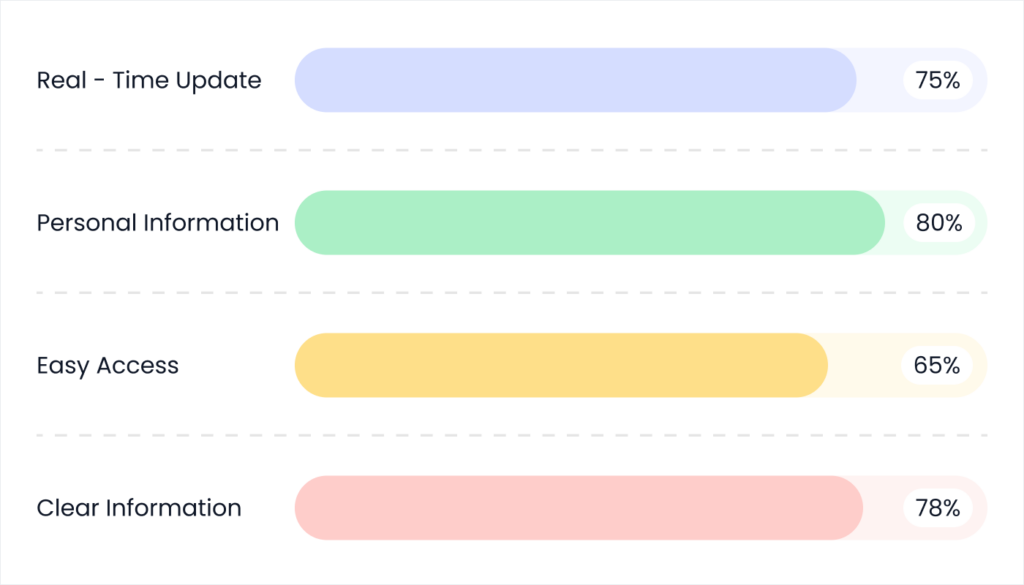
Real-Time Updates, Not Weekly Summaries
Today’s parents don’t want to wait until PTM to know how their child is doing. They want to know:
- Did my child reach school safely today?
- What homework was assigned in each subject?
- How did they perform in yesterday’s test?
- Are there any upcoming events I should know about?
Personalized Information, Not Generic Announcements
Parents want information specific to their child, not general school announcements mixed with irrelevant updates for other classes.
Two-Way Communication, Not One-Way Broadcasting
Modern parents want to be able to:
- Ask questions about their child’s progress
- Inform about child’s absence or health issues
- Schedule meetings with teachers
- Get quick responses to urgent concerns
How School ERP Transforms Parent Communication
A well-designed school ERP system addresses every communication challenge mentioned above. Here’s how:

Instant, Automated Updates
Instead of manually sending attendance messages, the ERP automatically notifies parents when their child arrives at school and when they leave. No more wondering “Did my child reach school safely?”
Real Example: At 8:15 AM, Mrs. Sharma receives a notification: “Aarav has arrived at school safely.” At 3:30 PM, another message: “Aarav has boarded bus #12 for home.” Simple, automatic, peace of mind.
Personalized Parent Portals
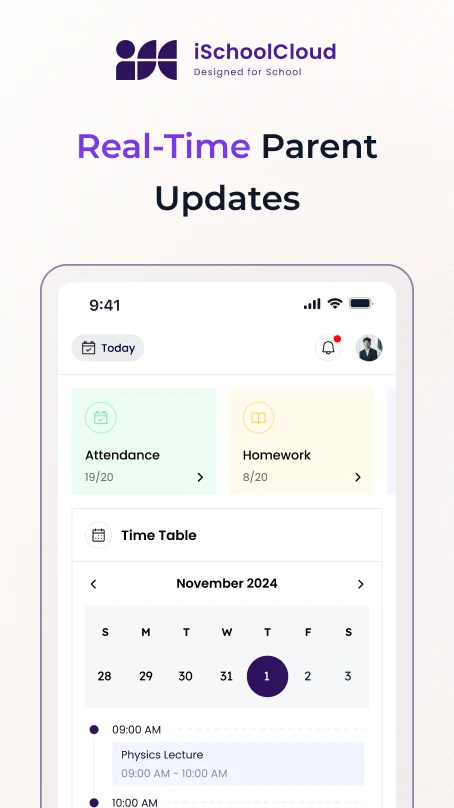
Each parent gets access to a personalized dashboard showing only their child’s information:
- Academic Progress: Real-time grades, test scores, assignment submissions
- Attendance History: Daily attendance with reasons for any absences
- Fee Management: Outstanding dues, payment history, online payment options
- Timetable: Daily schedule, exam dates, holiday calendar
- Announcements: Class-specific and school-wide notifications
Multi-Channel Communication
Good school ERPs don’t rely on just one communication method. They use:
- SMS alerts for urgent information
- App notifications for daily updates
- Email for detailed communications
- In-app messaging for two-way conversations
Practical Implementation Guide for Rajkot Schools
Ready to improve your parent communication? Here’s your step-by-step implementation guide:
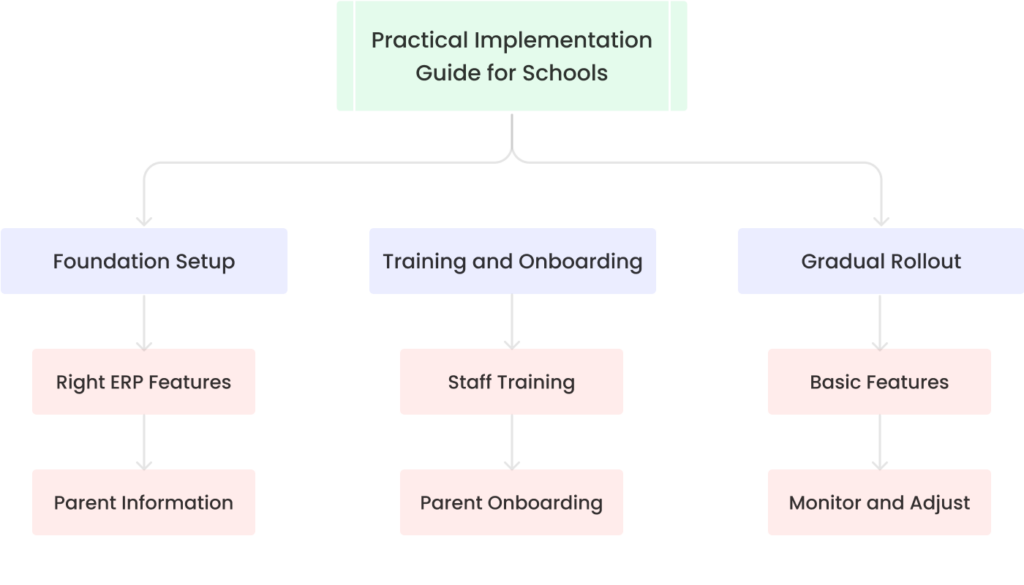
Phase 1: Foundation Setup (Week 1-2)
Choose the Right ERP Features
Not all school ERP systems are created equal. For effective parent communication in Gujarat schools, ensure your system includes:
- Mobile app for parents (Android & iOS)
- SMS integration with local telecom providers
- Multi-language support (English, Hindi, Gujarati)
- Offline capability for areas with poor internet
- Fee payment gateway integration
Collect Parent Information
Create a comprehensive database with:
- Primary and secondary parent contact numbers
- Email addresses (many Gujarat parents now use email)
- Preferred communication language
- Emergency contact details
- Communication preferences (SMS, app, email)
Phase 2: Training and Onboarding (Week 3-4)
Staff Training
Your success depends on how well your staff adapts to the new system:
- Teachers: How to mark attendance, update assignments, send individual messages
- Admin staff: How to send announcements, manage fee communications, handle parent queries
- Management: How to monitor communication effectiveness and parent satisfaction
Parent Onboarding
Don’t assume parents will figure out the system on their own:
- Organize parent orientation sessions
- Create simple video tutorials in local languages
- Provide printed quick-reference guides
- Set up a help desk for the first month
Phase 3: Gradual Rollout (Week 5-8)
Start with Basic Features
Don’t overwhelm parents with all features at once:
- Week 5: Attendance notifications only
- Week 6: Add homework assignments
- Week 7: Include exam schedules and results
- Week 8: Full communication features
Monitor and Adjust
Track these metrics to ensure success:
- Parent app adoption rate
- Message delivery and read rates
- Parent satisfaction surveys
- Reduction in phone calls to school office
- Teacher time savings
Real Success Stories from Gujarat Schools
Case Study 1: Improved Attendance Communication
“Before ERP, we had to call parents every time a child was absent. Now, if a child doesn’t arrive by 9 AM, parents automatically get an SMS. Our office phone calls reduced by 70%.” – Mr. Mehta, Principal, Rajkot
Case Study 2: Better Parent Engagement
“Parent-teacher meeting attendance increased from 60% to 85% after we started sending personalized progress reports through the app. Parents come prepared with specific questions about their child’s performance.” – Mrs. Dave, Surat School
Case Study 3: Streamlined Fee Collection
“Fee collection time reduced from 3 months to 3 weeks. Parents get automatic reminders, can pay online, and receive instant receipts. No more standing in queues or lost fee receipts.” – Dr. Shah, Ahmedabad School
Common Mistakes to Avoid
Learn from the experience of other Gujarat schools. Avoid these common implementation mistakes:

Mistake 1: Information Overload
What happens: Schools send too many notifications, causing parents to ignore all messages.
Solution: Create communication guidelines. Send only necessary, relevant information.
Mistake 2: One-Size-Fits-All Approach
What happens: Sending the same messages to all parents regardless of their child’s class or needs.
Solution: Segment communication by class, activity, or student performance.
Mistake 3: Ignoring Non-Tech-Savvy Parents
What happens: Some parents, especially grandparents, get left out of digital communication.
Solution: Maintain multiple communication channels including phone calls for important updates.
Mistake 4: Poor Crisis Communication
What happens: During emergencies (sudden holidays due to bandh, weather issues), schools fail to communicate quickly.
Solution: Set up emergency broadcast features for instant communication to all parents.
Advanced Communication Strategies
Once your basic ERP communication is running smoothly, consider these advanced strategies:

Behavioral Insights and Analytics
Modern ERPs provide valuable insights about parent engagement:
- Which types of messages get highest open rates
- Optimal timing for different types of communications
- Parents who need additional engagement support
- Communication preferences by demographic
Automated Communication Workflows
Set up intelligent automation for routine communications:
- Birthday reminders: Automatic wishes for students and parents
- Achievement celebrations: Auto-congratulations for good performance
- Absence follow-ups: Automatic care messages for extended absences
- Fee reminders: Graduated reminder sequence before due dates
Interactive Features
Enable two-way communication with features like:
- Parent polls for school events and policies
- Digital permission slips
- Online parent-teacher meeting scheduling
- Virtual classroom participation for working parents
Measuring Communication Success
How do you know if your new communication system is working? Track these key metrics:
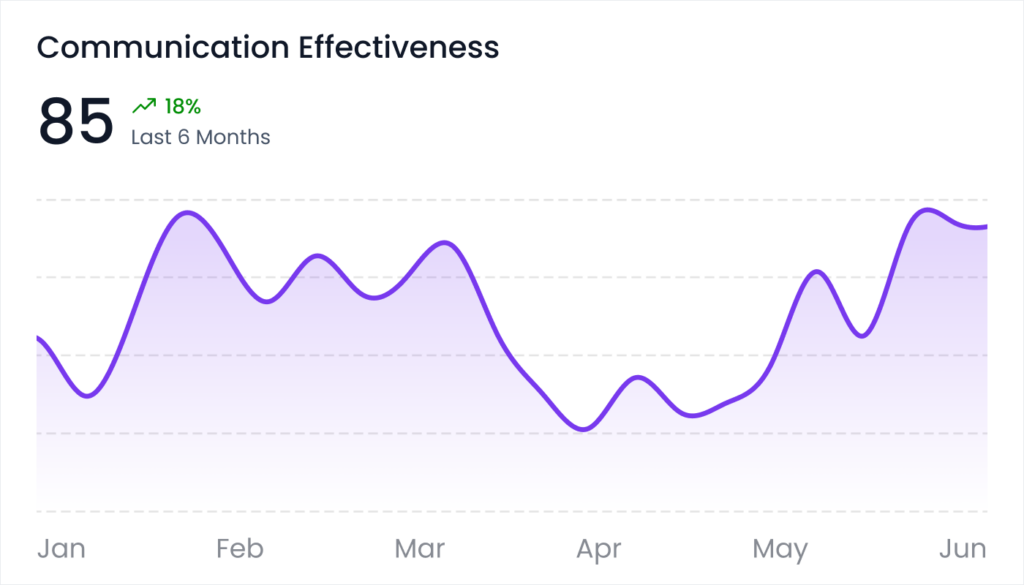
Quantitative Metrics
- Message delivery rate: What percentage of messages reach parents?
- App adoption rate: How many parents actively use the mobile app?
- Response time: How quickly do parents respond to important communications?
- Phone call reduction: Decrease in calls to school office
- PTM attendance: Improvement in parent-teacher meeting participation
Qualitative Metrics
- Parent satisfaction surveys
- Teacher feedback on communication efficiency
- Parent testimonials and word-of-mouth referrals
- Reduction in communication-related complaints
Choosing the Right ERP Partner for Your School
Not all ERP providers understand the unique needs of Gujarat schools. Here’s what to look for:

Local Understanding
- Experience with Indian education system requirements
- Understanding of local festivals and holiday patterns
- Support for regional languages
- Knowledge of state board compliance needs
Technical Capabilities
- Mobile-first design (most parents use smartphones)
- Offline functionality for poor connectivity areas
- Integration with local payment gateways
- Robust security for student data protection
Support and Training
- Local language support team
- On-site training availability
- Regular system updates and maintenance
- 24/7 technical support during critical periods
Future-Proofing Your Communication Strategy
Technology keeps evolving. Here’s how to ensure your communication system stays relevant:

Emerging Trends to Watch
- Voice messages: Many parents prefer listening to voice notes
- Video updates: Teachers sending short video progress reports
- AI-powered insights: Predictive analytics for student performance
- Blockchain records: Permanent, tamper-proof academic records
Preparing for Change
- Choose ERP systems with regular update cycles
- Invest in staff training for new technologies
- Stay connected with other progressive schools in Gujarat
- Regularly survey parents about their evolving communication needs
Taking Action: Your Next Steps
Ready to transform your school’s parent communication? Here’s your action plan:
This Week:
- Survey your current parent communication challenges
- Calculate time spent on manual communication tasks
- Research ERP providers with strong communication features
- Talk to other principals who’ve implemented similar systems
Next Month:
- Demo 2-3 different ERP systems
- Calculate ROI based on your school’s specific needs
- Plan your implementation timeline
- Prepare your team for the transition
In 3 Months:
- Have your new communication system up and running
- Complete parent onboarding and training
- Monitor initial results and parent feedback
- Fine-tune settings based on real usage data
In Summary:
Improving parent communication isn’t just about adopting new technology – it’s about building stronger relationships between your school and families. When parents feel informed, involved, and valued, they become your school’s biggest advocates.
Schools across Rajkot and Gujarat that have made this transition report not just operational improvements, but fundamental changes in their school culture. Teachers spend more time teaching, parents feel more connected, and students benefit from the stronger school-home partnership.
The question isn’t whether you should improve your parent communication – it’s whether you’ll lead this change or be forced to catch up later.
Your parents are ready for better communication. Your teachers want simpler processes. Your school deserves the efficiency and professionalism that modern ERP systems provide.
The transformation starts with a single decision: We can do better for our families.


 4.9 5000 Total Reviews
Join Our Inner Circle for Special Perks

 Trusted by 50000 educational pioneers