πŸ”΄   Live
New school onboarding for 2026–27 academic year.
Reserve Your DEMO Slot β†’
Categories
Technology in Education

Education Technology Trends Shaping Gujarat’s Future

Last week, I visited three schools in Rajkot within a single afternoon. What I saw completely changed how I think about education in Gujarat.

At the first school, teachers were still marking attendance in thick registers, parents called continuously asking about their children, and the principal looked exhausted managing daily administrative fires.

At the second school, students were learning math through interactive AI tutors, parents received real-time updates on their phones, and teachers were actually teaching instead of drowning in paperwork.

The third school? They were somewhere in between – trying to figure out which direction to go.

Here’s the reality: Gujarat is experiencing an education technology revolution that’s happening faster than most school owners realize. While some institutions are becoming pioneers, others risk being left behind completely.

After spending months researching and talking to educators across Gujarat, I’ve identified the technology trends that will define our state’s educational future. These aren’t distant possibilities – they’re changes happening right now in progressive schools from Rajkot to Ahmedabad.

Why Gujarat Is Becoming India’s Education Technology Trends Laboratory

Blog 6. Why Gujarat Is Becoming Indias Education Technology Trends Laboratory
Education Technology Trends Shaping Gujarat's Future 12

Gujarat has always been a state of forward-thinking entrepreneurs. Now that same innovation spirit is transforming how we educate our children.

The Perfect Storm for Innovation

Three factors are converging to make Gujarat a leader in education technology:

  • Government Support:Β The state government has committed unprecedented resources to educational digitization. The recent budget allocation of β‚Ή73,498 crores for school education shows serious commitment to technological advancement.
  • Industry Expertise:Β Gujarat’s strong technology sector means we have local companies developing education solutions specifically for our schools’ needs. Unlike generic international products, these understand the realities of Gujarat classrooms.
  • Educational Culture:Β Gujarat parents value education highly and are willing to embrace technology that genuinely improves their children’s learning experience.

The Regional Advantage

While other states struggle with language barriers or infrastructure limitations, Gujarat schools have significant advantages:

  • Strong internet connectivity in major cities like Rajkot, Ahmedabad, and Surat
  • Tech-savvy parent populations who understand digital communication
  • Established educational institutions ready to innovate
  • Local government policies supporting educational technology adoption
Blog 6. The 10 Technology Trends Reshaping Gujarat Schools

Education Technology Trends Shaping Gujarat's Future 13

Based on extensive research and conversations with educators across our state, here are the education technology trends that will define Gujarat’s educational future:

1. AI-Powered Personalised Learning (Already Happening)

Artificial Intelligence isn’t science fiction anymore – it’s becoming a reality in Gujarat classrooms.

  • What it looks like:Β Students in Ahmedabad are already using AI tutors that adapt to their learning pace. If Priya struggles with fractions, the AI provides extra practice and different explanation methods. If Arjun masters concepts quickly, he gets more challenging problems automatically.
  • Why Gujarat schools need this:Β With diverse student backgrounds and learning speeds, personalised AI ensures no child gets left behind or held back.
  • Timeline:Β Leading schools are implementing this now. By 2026, it will be standard in progressive Gujarat institutions.
  • Investment required:Β β‚Ή50,000-2 lakhs annually for schools with 300-500 students

2. Hybrid Learning Models (The New Standard)

Post-pandemic, Gujarat schools discovered that combining in-person and digital learning creates the best educational experience.

  • Real example:Β A school in Surat now conducts morning classes in-person for core subjects, then uses afternoon digital sessions for enrichment activities, homework support, and extra help for struggling students.
  • Parent benefit:Β Families can access expert teachers even when physical attendance isn’t possible due to illness, weather, or family situations.
  • Teacher advantage:Β Educators can reach more students, provide individual attention through digital platforms, and create flexible learning schedules.

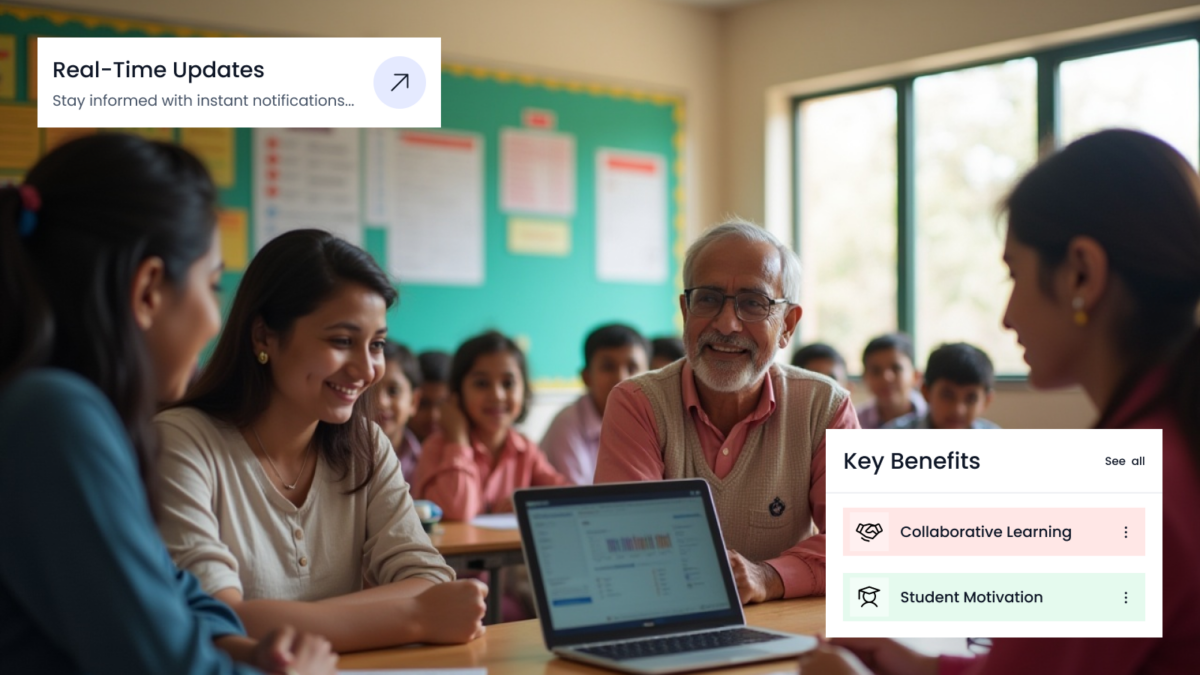
3. Real-Time Parent Communication Systems (No More Phone Calls)

The days of parents calling schools constantly for updates are ending in progressive Gujarat institutions.

  • Current reality:Β Schools using advanced parent communication report 70% fewer phone calls to the office. Parents receive automatic notifications about attendance, homework, exam schedules, and even positive behavior observations.
  • Local innovation:Β Some Gujarat schools are implementing bilingual communication systems that send messages in both English and Gujarati, ensuring all parents stay informed regardless of their language preference.
  • Impact on school efficiency:Β Office staff can focus on educational support instead of answering routine questions all day.

4. Digital Assessment and Instant Feedback

Traditional pen-and-paper exams are being revolutionized by digital assessment tools that provide immediate results and detailed analytics.

  • How it works:Β Students take tests on tablets or computers. Results are available instantly, showing not just scores but exactly which concepts need review. Teachers receive detailed reports about class performance trends.
  • Example from Rajkot:Β One school now conducts weekly digital assessments that help teachers identify learning gaps before they become serious problems. Parents receive detailed progress reports highlighting their child’s strengths and areas needing attention.
  • Time savings:Β Teachers report saving 10+ hours weekly on grading and result preparation.

5. Smart Classroom Infrastructure

Gujarat schools are upgrading physical classrooms with technology that enhances traditional teaching methods.

Standard features becoming common:

  • Interactive whiteboards that connect to the internet
  • Classroom projectors for multimedia lessons
  • Student tablets for interactive exercises
  • High-speed WiFi supporting 30+ devices simultaneously
  • Audio systems ensuring every student hears clearly

Local adaptation: Gujarat companies are developing affordable smart classroom packages specifically designed for Indian schools, making this technology accessible to smaller institutions.

6. School Management Automation (The Administrative Revolution)

Complete school management systems are eliminating the administrative burden that prevents educators from focusing on education.

Comprehensive automation includes:

  • Automated attendance tracking with parent notifications
  • Digital fee collection with online payment options
  • Exam scheduling and result generation
  • Teacher performance tracking and support
  • Student progress analytics
  • Inventory and resource management

ROI for Gujarat schools: Institutions report administrative cost reductions of 40-60% within the first year of implementation.

7. Cybersecurity and Data Protection

As schools become more digital, protecting student data and ensuring online safety becomes critical.

Essential security measures:

  • Encrypted student data storage
  • Secure parent communication channels
  • Protected online learning environments
  • Regular security audits and updates
  • Cybersecurity education for students and staff

Gujarat-specific considerations: Local data protection laws and cultural sensitivities around child privacy require specialized security approaches.

8. Mobile-First Education Platforms

With smartphone penetration reaching 85% among Gujarat families, mobile-optimized education platforms are becoming essential.

Mobile capabilities parents expect:

  • Instant attendance notifications
  • Homework and assignment updates
  • Exam schedules and results
  • Direct communication with teachers
  • Fee payment and status checking
  • School event and announcement updates

Technical consideration: Platforms must work smoothly on basic Android phones, not just high-end smartphones.

9. Data Analytics for Educational Improvement

Progressive Gujarat schools are using data to make informed decisions about curriculum, teaching methods, and student support.

Actionable analytics include:

  • Student performance trends across subjects
  • Teaching method effectiveness analysis
  • Parent engagement patterns
  • Resource utilization optimization
  • Predictive indicators for student success

Example impact: A school in Vadodara used data analytics to identify that students performed 25% better in math when concepts were introduced through visual examples rather than abstract explanations.

10. Local Language Integration

Technology platforms are adapting to Gujarat’s multilingual educational environment.

Bilingual features:

  • Parent communication in Gujarati and English
  • Student assessments available in preferred languages
  • Gujarati voice commands for AI tutors
  • Cultural calendar integration for local festivals and holidays

Community benefit: Grandparents and extended family can participate in children’s education through Gujarati-language updates and reports.

Government Initiatives Accelerating Change

Blog 6. Government Initiatives Accelerating Change
Education Technology Trends Shaping Gujarat's Future 14

Gujarat’s government is actively supporting educational technology adoption through several initiatives:

Digital Gujarat Mission in Education

The state government has allocated β‚Ή1,200 crores for educational digitization over the next three years. This includes:

  • High-speed internet connectivity to all government schools
  • Teacher training programs for technology integration
  • Subsidized technology procurement for private schools
  • Digital literacy programs for parents

Public-Private Partnership Opportunities

New policies encourage collaboration between government schools and private technology companies, creating opportunities for knowledge sharing and cost reduction.

Regulatory Support

Streamlined approval processes for educational technology implementation make it easier for schools to adopt new systems quickly.

What This Means for Different Types of Schools

Blog 6. What This Means for Different Types of Schools
Education Technology Trends Shaping Gujarat's Future 15

Small Schools (Under 300 Students)

  • Priority focus:Β Basic management automation and parent communication systems
  • Investment timeline:Β Start with attendance and fee management, add features gradually
  • Expected benefits:Β 50% reduction in administrative workload, significantly improved parent satisfaction

Medium Schools (300-700 Students)

  • Comprehensive approach:Β Full school management systems plus basic AI-powered learning tools
  • Leadership opportunity:Β Become local technology leaders by implementing innovative features
  • Competitive advantage:Β Attract tech-savvy families seeking modern educational approaches

Large Schools (700+ Students)

  • Advanced implementation:Β Complete technology integration including AI tutors, data analytics, and smart classrooms
  • Innovation leadership:Β Develop custom solutions that can be shared with other Gujarat schools
  • Market positioning:Β Establish reputation as Gujarat’s most technologically advanced educational institutions

The Challenges Gujarat Schools Must Navigate

Blog 6. The Challenges Gujarat Schools Must Navigate
Education Technology Trends Shaping Gujarat's Future 16

While opportunities abound, schools must thoughtfully address several challenges:

Infrastructure Limitations

  • Internet connectivity:Β Rural areas still face bandwidth limitations that affect digital learning quality
  • Power stability:Β Monsoon season disruptions require backup power solutions for critical systems
  • Device management:Β Maintaining tablets, computers, and smart boards requires technical expertise

Human Resource Development

  • Teacher training:Β Educators need ongoing professional development to use technology effectively
  • Technical support:Β Schools require dedicated IT support or reliable vendor relationships
  • Change management:Β Some staff and parents resist technological changes

Financial Considerations

  • Initial investment:Β Technology implementation requires significant upfront costs
  • Ongoing expenses:Β Software licenses, maintenance, and upgrades create recurring costs
  • ROI timeline:Β Benefits may take 12-18 months to offset initial investments

Industry Predictions: Where Gujarat Education Is Heading

Blog 6. Industry Predictions Where Gujarat Education Is Heading
Education Technology Trends Shaping Gujarat's Future 17

Based on current trends and expert analysis, here’s what we can expect in Gujarat’s educational future:

By 2026: The New Normal

  • 80% of Gujarat schools will use some form of digital school management
  • Parent communication will be primarily digital in urban areas
  • Hybrid learning will be standard practice, not emergency response
  • AI tutors will support traditional teachers in most progressive schools

By 2028: Advanced Integration

  • Personalized learning paths will be customized for each student using AI
  • Virtual reality will enhance science and history education
  • Blockchain credentials will secure and verify student achievements
  • IoT sensors will monitor classroom environments for optimal learning conditions

By 2030: Leadership Position

  • Gujarat schools will export educational technology solutions to other Indian states
  • International recognition for innovative educational approaches
  • Complete digital transformation of administrative and academic processes
  • AI-human collaboration will redefine the teaching profession

Success Stories: Schools Leading the Change

Blog 6. Success Stories Schools Leading the Change
Education Technology Trends Shaping Gujarat's Future 18

Case Study: Progressive School in Rajkot

Challenge: 500-student school struggling with administrative efficiency and parent communication

Solution: Implemented comprehensive school management system with AI-powered parent communication

Results after 18 months:

  • Administrative costs reduced by 45%
  • Parent satisfaction scores increased from 6.5/10 to 9.2/10
  • Teacher productivity improved by 30%
  • Student enrollment increased by 20% due to improved reputation

Innovation Example: Bilingual AI Implementation

  • School:Β Medium-sized institution in Ahmedabad
  • Innovation:Β Gujarati-English AI tutor that adapts to student language preferences
  • Impact:Β Students showed 35% improvement in subject comprehension when learning in their preferred language

How to Position Your School for the Future

Blog 6. How to Position Your School for the Future
Education Technology Trends Shaping Gujarat's Future 19

Assessment: Where Are You Now?

Technology readiness checklist:

  • β–‘ Reliable internet connectivity (minimum 25 Mbps)
  • β–‘ Basic computer access for administrative staff
  • β–‘ Smartphone adoption among parent community
  • β–‘ Staff openness to technology training
  • β–‘ Budget allocation for technology improvements

Planning: Your Technology Roadmap

Phase 1 (Next 6 months): Basic digital infrastructure

  • School management software for attendance and fees
  • Parent communication system
  • Staff training programs

Phase 2 (6-18 months): Enhanced learning tools

  • Digital assessment platforms
  • Interactive classroom technology
  • Student progress analytics

Phase 3 (18+ months): Advanced integration

  • AI-powered personalised learning
  • Comprehensive data analytics
  • Community-wide digital ecosystem

Implementation: Best Practices for Success

  • Start small, think big:Β Begin with one technology solution, perfect it, then expand
  • Involve stakeholders:Β Include teachers, parents, and students in technology decisions
  • Invest in training:Β Allocate 20-30% of technology budget to staff development
  • Measure impact:Β Track specific metrics to demonstrate ROI and improvement
  • Stay flexible:Β Technology evolves rapidly; choose adaptable solutions

Preparing Your Team for the Future

Blog 6. Preparing Your Team for the Future
Education Technology Trends Shaping Gujarat's Future 20

Professional Development Requirements

  • Administrator training:Β School management and leadership development
  • Teacher technology skills:Β Digital tools and platform proficiency
  • Student digital literacy:Β Responsible technology use and online safety
  • Parent education:Β Understanding and using school communication systems

Creating a Technology-Positive Culture

  • Vision communication: Help staff understand technology’s educational benefits
  • Gradual implementation: Avoid overwhelming people with too much change at once
  • Success celebration: Recognize and reward technology adoption achievements
  • Ongoing support: Provide continuous help and encouragement

Questions to Ask Yourself

  • How will my school remain competitive as technology adoption accelerates?
  • What opportunities am I missing by delaying technology implementation?
  • How could educational technology help solve my school’s current challenges?
  • What would parents say if they compared my school to more technologically advanced alternatives?

Taking Action: Your Next Steps

Blog 6. Taking Action Your Next Steps
Education Technology Trends Shaping Gujarat's Future 21

The future of education in Gujarat is being written now. Your school can either help write that story or watch from the sidelines.

Immediate Actions (This Week)

  1. Assess your current position: Complete the technology readiness checklist above
  2. Research local options: Identify Gujarat-based education technology providers
  3. Visit progressive schools: See technology implementation in action
  4. Survey your community: Understand parent and teacher technology expectations

Short-term Planning (Next Month)

  1. Develop technology roadmap: Create phased implementation plan
  2. Budget for change: Allocate resources for technology investment
  3. Build support team: Identify internal technology champions
  4. Begin vendor discussions: Explore options and pricing

Long-term Vision (Next Year)

  1. Implement core systems: Launch fundamental technology improvements
  2. Measure and optimize: Track results and refine approaches
  3. Expand capabilities: Add advanced features as staff and parents adapt
  4. Share learnings: Contribute to Gujarat’s educational technology community

Conclusion: Gujarat’s Educational Renaissance

We’re witnessing the beginning of Gujarat’s educational renaissance. Technology isn’t replacing traditional values and methods – it’s enhancing them, making good schools even better and opening new possibilities for student success.

The schools that thrive in this new environment will be those that thoughtfully integrate technology while maintaining focus on what matters most: helping every child reach their full potential.

Your school has the opportunity to be part of this transformation. The question isn’t whether change will come – it’s whether you’ll lead it or follow it.

The future of education in Gujarat is bright, innovative, and full of possibilities. Your school’s role in that future depends on the decisions you make today.
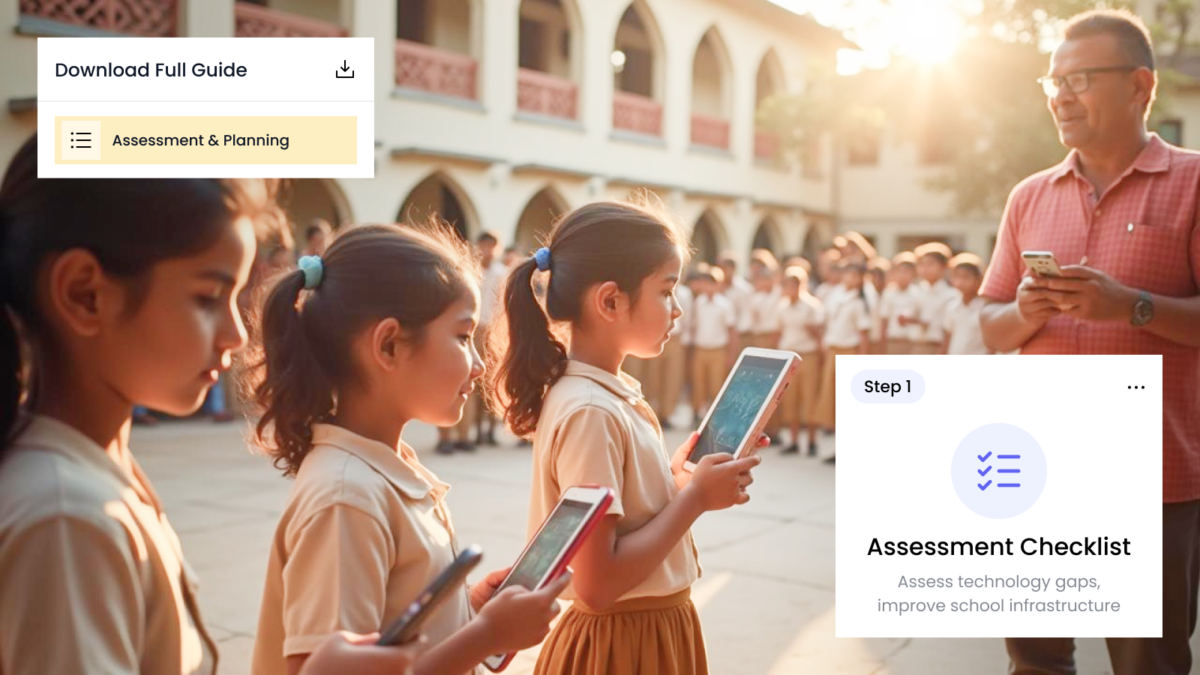
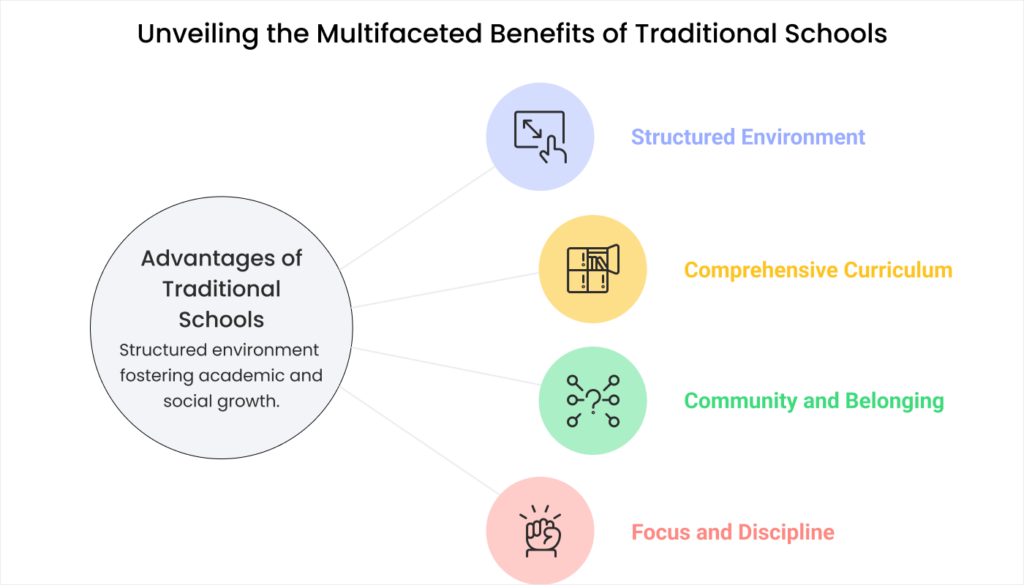

Table of Contents

Categories
Insights for School Leaders

Digital Transformation for Traditional Schools: A Step-by-Step Guide

Three months ago, I visited a 150-year-old school in Rajkot that had just completed their digital makeover. The principal, Mrs. Patel, walked me through their modern office where teachers were updating attendance on tablets while parents received real-time notifications on their phones.

“Six months ago, we were drowning in paper,” she told me, gesturing toward a single file cabinet that now held only legal documents. “Today, our teachers spend 30 minutes less daily on administrative work, and parents actually thank us for keeping them informed.”

What struck me wasn’t the technology – it was how natural everything felt. Students still felt like students. Teachers still focused on teaching. Parents still cared about their children’s progress. The school still felt like the same warm, community-focused institution it had always been.

The only difference? Everything worked better.

If you’re running a traditional school in Gujarat and wondering whether digital management could work for your institution, Mrs. Patel’s story proves it’s not only possible – it’s surprisingly straightforward when done right.

Why Traditional Schools Actually Have an Advantage

Blog 5. Why Traditional Schools Actually Have an Advantage
Digital Transformation for Traditional Schools: A Step-by-Step Guide 32

Before we dive into the how-to steps, let’s address the elephant in the room: many traditional school owners worry that digital systems will somehow make their school less personal or community-focused.

The truth is exactly the opposite.

Your Foundation is Already Strong

Traditional schools in Rajkot and across Gujarat have something that newer institutions spend years trying to build: established relationships with families, proven educational approaches, and deep community roots.

Digital tools don’t replace these advantages – they amplify them.

When your office staff spends less time hunting for files, they have more time for the personal interactions that parents value. When teachers don’t need to fill out multiple attendance registers, they can focus on the individual attention that makes your school special.

Parents Trust Your Judgment

Families choose traditional schools because they trust your educational philosophy. When you introduce digital improvements, parents see it as your school getting even better, not changing into something different.

A school in Ahmedabad discovered this when worried parents initially questioned their move to digital attendance. Within two weeks, the same parents were praising the school for sending daily attendance updates that helped them stay connected to their child’s school routine.

You Control the Pace

Unlike new schools that might rush into complex technology to appear modern, established schools can implement digital tools thoughtfully and gradually. You already have enrolled students and parent trust – there’s no pressure to impress anyone with flashy technology.

The Complete Step-by-Step Implementation Guide

Blog 5. The Complete Step by Step Implementation Guide
Digital Transformation for Traditional Schools: A Step-by-Step Guide 33

Here’s the exact process that successful Gujarat schools use to transition from traditional paper-based management to digital systems without disrupting their educational mission.

Step 1: Assessment and Planning (Weeks 1-2)

Map Your Current Processes

Start by documenting exactly how your school operates today. Spend one week observing and recording:

  • Morning routines: How do teachers mark attendance? How long does it take? Where do the records go?
  • Fee collection: What steps are involved from payment to receipt? Who handles queries? How are records maintained?
  • Parent communication: How do you currently share information? What works well? What causes confusion?
  • Record keeping: Where are student files stored? How do you find information quickly? What happens during busy periods?

Don’t judge or criticize current methods – just document them honestly. You’ll need this baseline to measure improvement later.

Identify Your Biggest Pain Points

Ask your staff these specific questions:

“What takes the longest time in your daily routine that doesn’t directly help students?”

“What do parents ask about most frequently that we should be able to answer instantly?”

“What mistakes happen regularly that we could prevent with better systems?”

“What makes you stay late or work overtime that shouldn’t be necessary?”

Their answers will guide your implementation priorities.

Set Realistic Goals

Don’t aim for perfection immediately. Instead, set specific, measurable goals like:

  • Reduce daily attendance processing time by 50%
  • Answer parent fee queries instantly instead of “we’ll check and call back”
  • Send attendance updates to parents same day instead of weekly summaries
  • Eliminate overtime during report card preparation

Step 2: Team Preparation (Weeks 2-3)

Address Concerns Honestly

Your staff will have worries about digital systems. Common concerns in Gujarat schools include:

“What if I can’t learn the new system?”
Response: “We’ll train everyone thoroughly, and you’ll have support whenever you need it. The systems we’re considering are designed to be simpler than our current paper processes.”

“Will this mean layoffs or job changes?”
Response: “No one will lose their job. Digital systems will make your current work easier and give you time for more meaningful tasks that help students and parents.”

“What if the technology breaks down?”
Response: “We’ll have backup systems and support. Digital systems are actually more reliable than paper – you can’t lose a computer file in the rain or misplace it in a different drawer.”

Choose Your Champions

Identify 2-3 staff members who are excited about the change or comfortable with technology. These champions will:

  • Test new systems first and provide feedback
  • Help train other staff members
  • Solve minor technical issues without calling support
  • Encourage reluctant team members during the transition

Plan Your Communication Strategy

Decide how you’ll inform parents about upcoming changes. Most successful schools use this approach:

Month 1: “We’re exploring ways to serve you better with improved communication and more efficient processes.”

Month 2: “We’ve decided to upgrade our administrative systems to provide you with real-time updates and faster service.”

Month 3: “Starting next week, you’ll receive daily attendance updates and can check fee status anytime through our new system.”

Step 3: Technology Selection (Weeks 3-4)

Define Your Must-Have Features

Based on your assessment, create a simple checklist of essential capabilities:

Essential Features Checklist:
  • ☐ Easy attendance marking (under 2 minutes per class)
  • ☐ Automatic parent notifications for attendance
  • ☐ Simple fee tracking and receipt generation
  • ☐ Basic student information management
  • ☐ Works well on existing computers and smartphones
  • ☐ Support available in Hindi or Gujarati
  • ☐ Data backup and security included

Evaluate Options Practically

Don’t just watch demos – insist on hands-on testing with your actual school data. Ask vendors to set up trial accounts where your staff can practice with real student information and scenarios.

Test these specific scenarios:

  • New student admission: Enter a complete student profile from scratch
  • Fee payment: Process a partial payment with late fees and generate receipt
  • Attendance issue: Mark a student absent, send parent notification, then correct the mistake
  • Report generation: Create attendance summary for government compliance

Check References Thoroughly

Speak with at least 3 schools similar to yours that have used each system for at least 6 months. Ask specific questions:

“What surprised you most during implementation?”

“How long did it take your most hesitant staff member to become comfortable?”

“What problems occurred that you didn’t expect?”

“How helpful was vendor support when issues arose?”

“Would you choose the same system again today?”

Step 4: Infrastructure Preparation (Week 4-5)

Assess Your Current Technology

Inventory what you already have:

  • Computers: How many? What condition? Can they run new software smoothly?
  • Internet connection: Speed and reliability, especially during peak usage times
  • Smartphones/tablets: What devices do staff and parents currently use?
  • Printers: Capability for generating receipts and reports

Plan Necessary Upgrades

Most traditional schools need minimal technology upgrades:

Priority 1 (Essential):

  • Reliable internet connection (minimum 10 Mbps for schools under 500 students)
  • One computer in the main office capable of running modern software
  • Basic printer for receipts and reports

Priority 2 (Helpful but not essential initially):

  • Tablets for teachers to mark attendance in classrooms
  • Backup internet connection (mobile hotspot)
  • Additional computers in teacher areas

Set Up Backup Systems

Plan for technology failures:

  • Internet outage: Mobile hotspot or offline-capable features
  • Computer problems: Backup device or manual procedures
  • Power issues: UPS (uninterruptible power supply) for critical systems

Step 5: Pilot Implementation (Weeks 5-7)

Start Small and Smart

Don’t try to digitize everything at once. Choose one area for your pilot program:

Best starting points for Gujarat schools:

  1. Daily attendance: Most visible to parents, immediate benefits for teachers
  2. Fee inquiries: Reduces phone calls, improves parent satisfaction
  3. Basic parent communication: Announcements and updates

Implement your chosen pilot area completely before adding other features.

Run Parallel Systems Initially

For the first 2-3 weeks of your pilot, maintain both digital and paper systems. This allows you to:

  • Compare accuracy between old and new methods
  • Build staff confidence with the safety net of familiar processes
  • Identify and solve problems before going fully digital
  • Train staff without pressure to get everything perfect immediately

Gather Daily Feedback

Create a simple feedback system for your pilot period:

Daily Pilot Feedback Form:

Date: ___________

Task completed: ___________

Time taken (digital vs. paper): ___________

Problems encountered: ___________

What worked well: ___________

Suggestions for improvement: ___________

Step 6: Full System Launch (Weeks 7-8)

Choose Your Launch Date Carefully

Time your full launch for maximum success:

Best timing:

  • Beginning of a new academic term
  • After festival breaks when routine is resetting anyway
  • During periods of normal activity (avoid exam or admission seasons)

Avoid launching during:

  • Exam weeks or result preparation
  • Major festivals when staff attention is divided
  • Admission seasons when office workload is already high
  • Monsoon season when internet connectivity might be unreliable

Prepare Parents in Advance

Send clear, simple communication about what parents can expect:

Sample Parent Communication:

“Starting Monday, you’ll begin receiving daily attendance updates via SMS. You’ll also be able to check your child’s fee status anytime by sending a simple SMS or using our parent portal.

These improvements will help us serve you better and keep you more connected to your child’s school experience. Our phone lines will be less busy for important matters because routine questions can now be answered instantly.

If you have any questions about the new systems, please call us or visit the office. We’re here to help make this transition smooth for everyone.”

Plan Your Launch Day

Create a detailed schedule for launch day:

7:00 AM – Staff arrival

  • Test all systems before school starts
  • Verify internet connectivity and backup systems
  • Brief review of emergency procedures

8:00 AM – School starts

  • Normal school operations with digital attendance
  • Designated champion available for immediate support
  • Vendor support contact readily available

Throughout the day

  • Monitor system performance
  • Address staff questions immediately
  • Track parent responses to new communications

End of day

  • Debrief with staff about successes and challenges
  • Plan adjustments for next day if needed
  • Celebrate successful completion of launch day

Step 7: Optimization and Expansion (Weeks 8-12)

Monitor and Measure Success

Track the specific goals you set during planning:

MetricBefore DigitalWeek 1Week 4Week 8
Daily attendance time___ minutes___ minutes___ minutes___ minutes
Fee-related phone calls___ per day___ per day___ per day___ per day
Parent satisfaction___/10___/10___/10___/10

Address Ongoing Challenges

Common issues that emerge after launch and how to handle them:

Staff forgetting to use new system:

  • Set up gentle reminders and checklists
  • Make digital process the path of least resistance
  • Celebrate when staff remember and use systems correctly

Parents not checking digital communications:

  • Continue paper communications initially for important items
  • Teach parents gradually about new communication methods
  • Use multiple channels (SMS, calls, app) until adoption improves

Technical glitches or slowdowns:

  • Keep vendor support contacts easily accessible
  • Document recurring issues for systematic resolution
  • Have manual backup procedures ready

Plan Your Next Phase

Once your initial digital systems are working smoothly, consider adding:

Phase 2 possibilities:

  • Online fee payment: If parents are comfortable with digital systems
  • Digital report cards: Easier distribution and storage
  • Homework tracking: Better parent-teacher communication
  • Event management: Sports day, annual functions, parent meetings

Add new features only after current systems are stable and staff is comfortable.

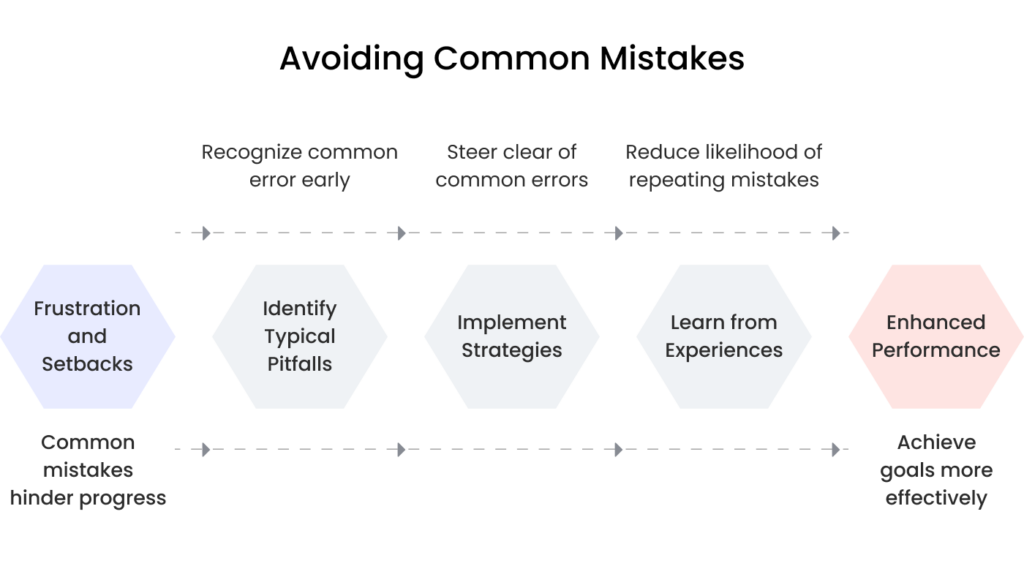
Common Mistakes and How to Avoid Them

Blog 5. Common Mistakes and How to Avoid Them
Digital Transformation for Traditional Schools: A Step-by-Step Guide 34

Learning from other Gujarat schools’ experiences can save you time, money, and frustration.

Mistake #1: Trying to Change Everything at Once

What happens: Schools attempt to digitize attendance, fees, communication, and academics simultaneously, overwhelming staff and creating chaos.

Reality check: Even tech-savvy schools take 6-12 months to fully implement comprehensive digital systems.

Better approach: Master one area completely before adding others. Success breeds confidence and makes subsequent changes easier.

Mistake #2: Ignoring Staff Comfort Levels

What happens: Schools choose sophisticated systems that intimidate staff, leading to resistance and poor adoption.

Reality check: The most advanced system is worthless if your team won’t use it consistently.

Better approach: Choose systems that match your staff’s current technology comfort level. You can always upgrade later as skills improve.

Mistake #3: Inadequate Training and Support

What happens: Schools provide minimal training, expecting staff to learn through trial and error, resulting in mistakes and frustration.

Reality check: Proper training is an investment, not an expense. Well-trained staff use systems effectively and become advocates for digital processes.

Better approach: Budget adequate time and resources for comprehensive training. Plan for ongoing support, not just initial instruction.

Mistake #4: Poor Parent Communication

What happens: Schools implement digital systems without properly explaining changes to parents, causing confusion and complaints.

Reality check: Parents need time to adapt to new communication methods and may need help learning to use digital tools.

Better approach: Communicate early and often. Provide clear instructions and continue offering familiar communication channels during the transition.

Mistake #5: No Backup Plans

What happens: When technology fails (and it sometimes will), schools without backup procedures face complete operational disruption.

Reality check: Digital systems are generally more reliable than paper, but you still need contingency plans.

Better approach: Maintain simple manual procedures for critical functions and ensure all staff know how to use them when needed.

Real Success Stories from Gujarat Schools

Blog 5. Real Success Stories from Gujarat Schools
Digital Transformation for Traditional Schools: A Step-by-Step Guide 35

Here are specific examples of how traditional schools in Gujarat successfully completed their digital makeovers.

Case Study 1: Small Private School in Rajkot (200 students)

Challenge: Office staff spent 3 hours daily managing attendance records and answering parent queries about student presence.

Solution: Implemented simple attendance system with automatic SMS notifications to parents.

Implementation timeline: 4 weeks from decision to full operation

Results after 6 months:

  • Attendance processing time reduced from 3 hours to 30 minutes daily
  • Parent phone calls about attendance dropped by 80%
  • Parents reported higher satisfaction with school communication
  • Office staff had more time for student support activities

Key success factor: Started with just attendance, perfected that system, then gradually added fee management and communication features.

Case Study 2: Established School in Ahmedabad (600 students)

Challenge: Complex fee structure with multiple payment plans created confusion for parents and administrative burden for staff.

Solution: Digital fee management system with parent portal for balance checking and payment history.

Implementation timeline: 8 weeks including staff training and parent education

Results after 1 year:

  • Fee-related queries reduced by 70%
  • Payment collection improved by 15% due to better tracking
  • Report generation time decreased from 2 days to 2 hours
  • Accounting accuracy improved significantly

Key success factor: Extensive parent education program helped families learn to use the new system effectively.

Case Study 3: Traditional Gujarati Medium School (350 students)

Challenge: Language barriers made many digital solutions unsuitable for their Gujarati-speaking parent community.

Solution: Bilingual system with SMS communications in Gujarati and simple parent portal with local language support.

Implementation timeline: 6 weeks with extra time for language customization

Results after 8 months:

  • 95% parent adoption rate for SMS notifications
  • 60% parents actively using digital fee checking
  • Improved parent-school relationship due to better communication
  • Staff efficiency increased without losing personal touch

Key success factor: Chose vendor who provided full Gujarati language support and culturally appropriate implementation approach.

Budgeting for Your Digital Makeover

Blog 5. Budgeting for Your Digital Makeover
Digital Transformation for Traditional Schools: A Step-by-Step Guide 36

Understanding real costs helps you plan appropriately and avoid financial surprises.

Typical Investment for Gujarat Schools

Small Schools (Under 300 students):

  • Software license: β‚Ή60,000 – β‚Ή1.2 lakhs annually
  • Implementation and training: β‚Ή20,000 – β‚Ή40,000 (one-time)
  • Hardware upgrades: β‚Ή15,000 – β‚Ή30,000 (if needed)
  • Total first year: β‚Ή95,000 – β‚Ή1.9 lakhs
  • Ongoing annual cost: β‚Ή60,000 – β‚Ή1.2 lakhs

Medium Schools (300-700 students):

  • Software license: β‚Ή1.2 – β‚Ή2.5 lakhs annually
  • Implementation and training: β‚Ή40,000 – β‚Ή75,000 (one-time)
  • Hardware upgrades: β‚Ή25,000 – β‚Ή50,000 (if needed)
  • Total first year: β‚Ή1.85 – β‚Ή3.25 lakhs
  • Ongoing annual cost: β‚Ή1.2 – β‚Ή2.5 lakhs

Return on Investment Timeline

Most Gujarat schools see positive ROI within 8-15 months through:

  • Reduced overtime costs: β‚Ή30,000 – β‚Ή60,000 annually
  • Lower administrative expenses: β‚Ή20,000 – β‚Ή40,000 annually
  • Improved fee collection: 5-15% improvement in on-time payments
  • Staff productivity gains: Equivalent to 10-20 hours weekly of administrative time
  • Parent satisfaction improvement: Better retention and referrals

Hidden Costs to Consider

  • Staff time during transition: Temporary productivity decrease during learning phase
  • Parent education efforts: Time spent helping parents adapt to new systems
  • Data cleanup: Organizing existing records before digital migration
  • Ongoing training: New staff members need system training

Measuring Success and Continuous Improvement

Blog 5. Measuring Success and Continuous Improvement
Digital Transformation for Traditional Schools: A Step-by-Step Guide 37

Digital implementation isn’t a one-time project – it’s an ongoing process of improvement and optimization.

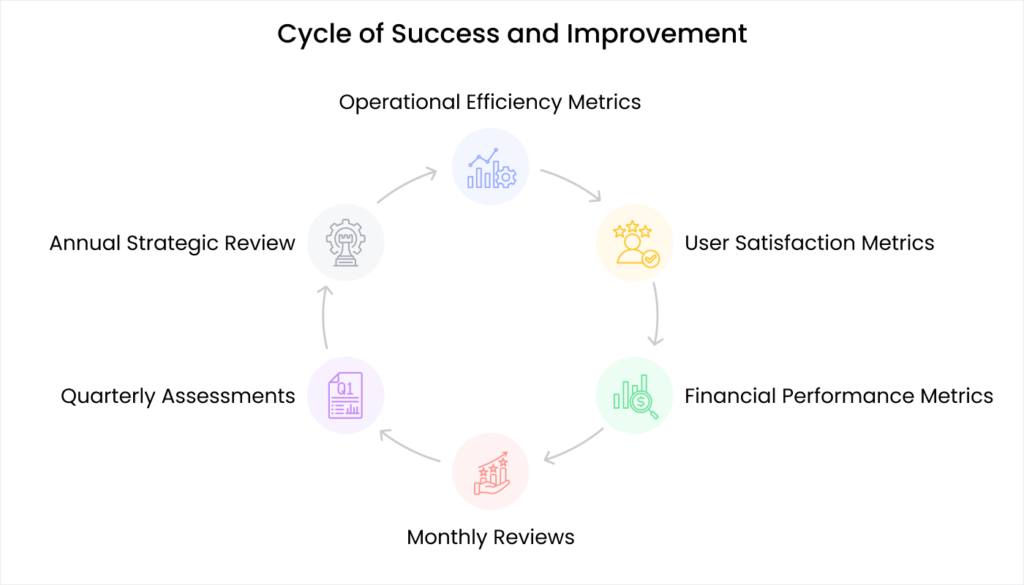
Key Performance Indicators to Track

Operational Efficiency Metrics:

  • Time spent on routine administrative tasks (daily/weekly measurement)
  • Accuracy rates for attendance, fee records, and communications
  • Response time for parent queries and requests
  • Overtime hours during busy periods (exam time, fee collection, etc.)

User Satisfaction Metrics:

  • Parent satisfaction surveys (quarterly)
  • Staff feedback on system usability (monthly)
  • Student feedback on any changes affecting their experience
  • Community perception of school modernization efforts

Financial Performance Metrics:

  • Administrative cost reduction compared to previous year
  • Fee collection efficiency and timeliness improvements
  • Reduction in error-related costs (re-work, corrections, complaints)
  • Return on technology investment calculation

Continuous Improvement Process

Monthly Reviews:

  • Staff feedback sessions on system performance
  • Parent communication effectiveness assessment
  • Technical issue identification and resolution
  • Process optimization opportunities

Quarterly Assessments:

  • Comprehensive performance metric analysis
  • User satisfaction survey results
  • ROI calculation updates
  • Strategic planning for next phase improvements

Annual Strategic Review:

  • Overall digital strategy effectiveness evaluation
  • Technology upgrade and expansion planning
  • Competitive positioning assessment
  • Long-term vision alignment check

Your School’s Digital Future

Blog 5. Your Schools Digital Future
Digital Transformation for Traditional Schools: A Step-by-Step Guide 38

The journey from traditional paper-based management to digital efficiency isn’t just about technology – it’s about creating better experiences for everyone in your school community.

What Success Really Looks Like

Successful digital implementation means:

For Teachers: More time focused on education, less time on administrative tasks

For Parents: Better communication, faster service, greater involvement in their child’s education

For Students: More attention from teachers, smoother school operations, better learning environment

For Administration: Efficient processes, accurate records, professional image, competitive advantages

The Competitive Reality

While you’re reading this guide, some schools in Gujarat are already implementing digital systems. Others are researching options. A few are still deciding whether to start.

Schools that act now gain first-mover advantages in their communities:

  • Parents notice and appreciate operational improvements
  • Teachers prefer working in efficiently-managed schools
  • Word-of-mouth recommendations improve based on better service
  • Professional image attracts quality families and staff

Schools that delay risk being perceived as outdated compared to more progressive competitors.

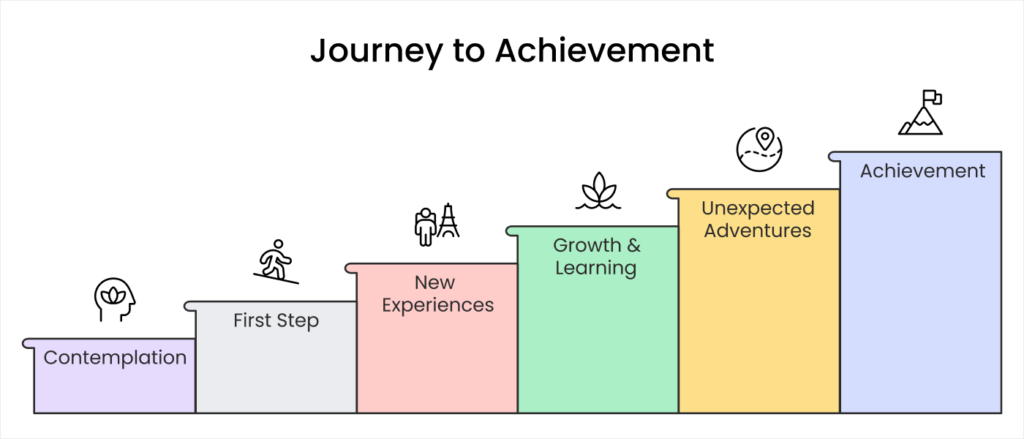
Taking Your First Step

Blog 5. Taking Your First Step
Digital Transformation for Traditional Schools: A Step-by-Step Guide 39

The hardest part of any digital makeover is getting started. But as you’ve seen from Gujarat schools’ success stories, the process is manageable when approached systematically.

What to Do Tis Week

Day 1-2: Complete the assessment questions from Step 1 of this guide

Day 3-4: Have conversations with key staff members about current challenges

Day 5-6: Visit or call 2-3 schools that have implemented digital systems

Day 7: Decide whether to proceed and set your implementation timeline

What to Do Next Month

If you decide to move forward:

  • Complete detailed process mapping and goal setting
  • Research and evaluate software options
  • Begin staff preparation and team building
  • Plan your technology infrastructure needs
  • Set your implementation timeline and milestones

Getting Expert Support

Many Gujarat schools benefit from expert guidance during their digital transformation. Professional support can help you:

  • Avoid common implementation mistakes
  • Choose the right technology for your specific needs
  • Plan realistic timelines and budgets
  • Train staff effectively for maximum adoption
  • Measure results and optimize performance

The investment in professional guidance often pays for itself through faster implementation, better results, and avoided mistakes.

Conclusion: Your School’s Bright Digital Future

Blog 5. Conclusion Your Schools Bright Digital Future
Digital Transformation for Traditional Schools: A Step-by-Step Guide 40

Mrs. Patel’s 150-year-old school in Rajkot proves that tradition and technology aren’t opposites – they’re perfect partners when combined thoughtfully.

Her school still maintains the warm, community-focused atmosphere that families love. Students still receive individual attention. Teachers still care deeply about educational outcomes. Parents still feel connected to their children’s school experience.

The only difference is that everything works better now. Administrative tasks take less time. Communication is more effective. Records are more accurate. Parents are more satisfied. Teachers are less stressed.

Your school can achieve the same transformation. The technology exists. The process is proven. Other Gujarat schools have shown it’s completely achievable.

The question isn’t whether your school should embrace digital tools – it’s when you’ll take the first step toward a more efficient, effective, and satisfying operation for everyone in your school community.

Your school’s digital future starts with a single decision to begin. Everything else follows naturally when you approach the process systematically and thoughtfully.

Ready to Start Your School’s Digital Journey?

Don’t let another academic year pass with inefficient systems holding back your school’s potential.

Contact us today for a personalized consultation about digital transformation options specifically designed for Gujarat schools like yours.

We’ll help you assess your needs, understand your options, and create a step-by-step implementation plan that fits your school’s unique situation and budget.

Your journey to digital efficiency starts with a single conversation.

Table of Contents

Categories
Parent Engagement & Awareness

How Technology Actually Brings Teachers and Parents Closer to Students in Rajkot Schools

Yesterday, I was talking to a parent outside a school in Rajkot. She was picking up her daughter and mentioned something that stuck with me:

“You know, since our school started using that new system, I feel like I know my daughter’s teachers better than ever before. I get little messages about her day, not just when she’s in trouble.”

This got me thinking about a conversation that happens in every school considering technology: “Won’t computers and apps make our school feel cold and impersonal?”

It’s a fair worry. We’ve all dealt with those frustrating automated phone systems that make you want to throw your phone out the window. So when school owners in Gujarat think about technology, many imagine replacing warm human connections with cold digital interfaces.

But here’s what’s actually happening in schools across Rajkot that have embraced the right kind of technology: they’re becoming more personal, not less.

Let me show you exactly how this works, and why the fear of “losing the human touch” is not just unfounded – it’s completely backwards.

The Human Connection Reality Check

Blog 4. The Human Connection Reality Check 1
How Technology Actually Brings Teachers and Parents Closer to Students in Rajkot Schools 52

Before we talk about technology making schools more personal, let’s be honest about how “personal” traditional school communication really is.

The Weekly Parent-Teacher Meeting Rush

Picture the typical parent-teacher meeting at a school in Rajkot. Teachers have 15 minutes per family. Parents wait in long lines. Teachers try to summarize three months of their child’s progress into a few rushed sentences.

“Arjun is doing well in math, needs to focus more in English, attendance is good.”

That’s it. Next parent, please.

Is this really personal? Or is it just face-to-face but still superficial?

The Paper Notice Communication Gap

Think about how most Gujarat schools currently communicate with parents:

  • Paper notices that get lost in school bags
  • WhatsApp groups where important messages get buried under 200 daily messages
  • Phone calls for everything, even basic information
  • Waiting until PTM to discuss concerns

Parents end up feeling disconnected from their child’s daily school experience. Teachers spend more time on administrative tasks and less time actually connecting with students.

The Teacher’s Perspective Nobody Talks About

Here’s something most parents don’t realize: teachers want closer relationships with families too. But when you’re managing 40+ students per class, spending hours on attendance registers, and dealing with constant interruptions for basic information, building meaningful connections becomes nearly impossible.

One teacher from a school in Maninagar told me: “I used to spend my evenings filling out reports instead of planning engaging lessons. I knew my students’ marks better than I knew their interests.”

The current system isn’t preserving personal connections – it’s preventing them.

How the Right Technology Actually Creates Deeper Connections

Blog 4. How the Right Technology Actually Creates Deeper Connections 1
How Technology Actually Brings Teachers and Parents Closer to Students in Rajkot Schools 53

Now let’s look at what happens when schools implement thoughtful technology solutions that support human relationships rather than replace them.

Real-Time Learning Stories, Not Just Report Cards

Instead of waiting for quarterly meetings, imagine parents receiving gentle updates throughout the week:

“Today Priya asked a thoughtful question about the water cycle that sparked a great class discussion. She’s really developing her scientific thinking!”

This isn’t a formal report card grade. It’s a teacher sharing a moment that shows they truly see and appreciate the child as an individual.

Schools with good ERP systems make this possible because teachers aren’t buried in paperwork. They have time to notice these moments and share them easily.

Parents as Partners, Not Just Information Recipients

When parents can see their child’s daily progress, they become better conversation partners at home:

Old way: “How was school today?” “Fine.”

New way: “I saw you worked on fractions today. Was that challenging?” This opens up real conversations about learning.

Parents start feeling like true partners in education rather than outsiders trying to guess what’s happening in their child’s school day.

Teachers Who Actually Know Their Students Better

When administrative work becomes automatic, teachers get their time back for what they really care about: teaching and connecting with students.

A principal from a school in Satellite shared this insight: “Our teachers now have detailed insights about each student’s learning patterns. They can spot when a child is struggling before it becomes a big problem. The technology helps them be more human, not less.”

Real Examples from Gujarat Schools

Blog 4. Real Examples from Gujarat Schools
How Technology Actually Brings Teachers and Parents Closer to Students in Rajkot Schools 54

Let me share some specific examples of how technology is making schools more personal for families across Gujarat.

The Morning Attendance That Builds Trust

Traditional method: Parents drop children and hope they arrived safely. If they’re worried, they call the school and interrupt the office staff.

Personal technology approach: Parents receive a gentle message: “Kavya arrived safely at 8:15 AM and went straight to her classroom with a big smile!”

This small touch eliminates worry and builds confidence. Parents feel connected to their child’s day from the very beginning.

The Homework Help That Involves Parents

Instead of children struggling alone with homework, parents now get context:

“Today’s math homework focuses on multiplication tables 6-8. If Raj finds it challenging, remind him about the ‘skip counting’ strategy we practiced in class. Feel free to reach out if you need clarification!”

This turns homework from a battle into a collaboration. Parents feel equipped to help rather than frustrated by their lack of context.

The Celebration of Small Victories

Schools with good systems can easily share positive moments:

  • “Meera helped a classmate with reading today – her kindness really stood out!”
  • “Arjun completed all his work without reminders this week – his focus is improving!”
  • “Shreya asked excellent questions during science class – her curiosity is wonderful!”

These aren’t formal achievements or grades. They’re human moments that show teachers truly see each child as an individual.

The Quick Problem Resolution

Old way: Child has a difficult day. Parent finds out days later, if at all. Problem escalates.

Personal technology way: Teacher sends a quick note: “Aditi seemed upset during lunch today. We talked, and she’s feeling better, but you might want to check in with her about the friend situation she mentioned.”

Parents can address issues while they’re still small, leading to better outcomes for children.

What Parents in Rajkot Are Actually Saying

Blog 4. What Parents in Rajkot Are Actually Saying
How Technology Actually Brings Teachers and Parents Closer to Students in Rajkot Schools 55

The best way to understand whether technology makes schools more or less personal is to listen to parents who’ve experienced both approaches.

From Anxiety to Confidence

“Before, I used to worry all day about whether my son was doing okay. Now I get little updates that let me know he’s settled and learning. I can focus on my work instead of constantly wondering.” – Parent from a school in Prahlad Nagar

From Distant to Connected

“I feel like I actually know my daughter’s teacher now. She shares little stories about Riya’s progress, and I can see that she really pays attention to each child’s personality.” – Parent from Bopal area

From Reactive to Proactive

“Instead of waiting for problems to become big issues, we can work together to help our child succeed. The communication helps us be better parents.” – Parent from Ghatlodia

From Outsider to Partner

“I used to feel like school was this separate world I couldn’t access. Now I feel like part of my child’s learning journey.” – Parent from Vastrapur

Why Teachers Love Technology That Supports Relationships

Blog 4. Why Teachers Love Technology That Supports Relationships 1
How Technology Actually Brings Teachers and Parents Closer to Students in Rajkot Schools 56

The teachers are often the best advocates for technology that enhances personal connections.

More Time for What Matters

When attendance, gradebooks, and basic communication become automatic, teachers get their evenings back. Instead of filling out forms, they can plan creative lessons or reflect on individual student needs.

Better Insights About Each Student

Digital systems help teachers track patterns they might miss otherwise:

  • Which students consistently struggle on Mondays
  • Who performs better with visual vs. auditory instruction
  • When certain students need extra encouragement
  • How different children respond to various teaching approaches

Easier Collaboration with Parents

Teachers can share insights while they’re fresh, not weeks later during scheduled meetings. This leads to better outcomes for students and stronger teacher-parent partnerships.

Focus on Education, Not Administration

As one teacher put it: “Technology handles the paperwork so I can focus on inspiring young minds. I became a teacher to make a difference in children’s lives, not to be a data entry clerk.”

Addressing the “But What About…” Concerns

Blog 4. Addressing the But What About. Concerns
How Technology Actually Brings Teachers and Parents Closer to Students in Rajkot Schools 57

Let’s tackle the most common worries about technology in schools head-on.

“But What About Face-to-Face Communication?”

Technology doesn’t replace face-to-face meetings – it makes them more meaningful. When parents and teachers connect in person, they can focus on deeper discussions about the child’s growth and goals rather than basic status updates.

PTMs become strategic planning sessions instead of information downloads.

“Won’t Parents Become Too Dependent on Technology?”

The goal isn’t to make parents dependent on technology – it’s to make them independent and empowered. When parents have access to their child’s information, they call the school less often and make more informed decisions.

“What If Technology Breaks Down?”

Good school systems have backups and contingency plans. But here’s the interesting thing: schools with reliable technology systems experience fewer communication breakdowns than schools relying solely on manual processes.

“Are We Raising Children to Expect Instant Everything?”

We’re raising children in a world where instant communication is normal. Teaching them to use technology responsibly for education and family connection is preparing them for reality, not spoiling them.

The Right Technology vs. The Wrong Technology

Blog 4. The Investment vs. Cost Reality Check
How Technology Actually Brings Teachers and Parents Closer to Students in Rajkot Schools 58

Not all school technology makes relationships more personal. Here’s how to tell the difference.

Technology That Enhances Relationships

  • Enables quick, meaningful communication between teachers and parents
  • Provides context for student progress and challenges
  • Saves time on administrative tasks so humans can focus on relationships
  • Makes information accessible without overwhelming people
  • Supports individual learning rather than one-size-fits-all approaches

Technology That Hurts Relationships

  • Replaces human interaction instead of supporting it
  • Creates more administrative burden for teachers
  • Feels impersonal and automated with no room for individual touch
  • Overwhelms families with too much information
  • Makes simple tasks complicated instead of easier

Questions to Ask About Any School Technology

Before implementing any system, ask:

  1. Will this give teachers more time to focus on students?
  2. Will parents feel more connected to their child’s learning?
  3. Does this make communication easier or more complicated?
  4. Can we still maintain the personal touch that makes our school special?
  5. Will this help us know each student better as an individual?

How to Keep Technology Personal in Your Rajkot School

Blog 4. How to Keep Technology Personal in Your Rajkot School
How Technology Actually Brings Teachers and Parents Closer to Students in Rajkot Schools 59

If you’re considering technology that enhances relationships, here are practical tips for implementation.

Start with Communication, Not Automation

Begin with features that improve human connection – parent communication, teacher collaboration, student progress sharing. Save full automation for later phases.

Train Teachers to Use Technology for Relationship Building

Show teachers how to share positive moments, not just problems. Encourage them to add personal touches to digital communications.

Set Communication Guidelines That Feel Human

  • Share successes regularly, not just concerns
  • Use conversational language, not formal reports
  • Include specific details that show individual attention
  • Respond to parent questions promptly and personally

Involve Parents in the Technology Adoption Process

Ask parents what kind of communication would help them feel more connected to their child’s education. Design your technology use around their actual needs, not just administrative convenience.

Measure Relationship Quality, Not Just Efficiency

Track metrics like:

  • Parent satisfaction with communication
  • Teacher satisfaction with student relationships
  • Student feelings about school connection
  • Quality of parent-teacher meeting discussions

The Future of Personal Education in Gujarat

Blog 4. The Future of Personal Education in Gujarat 1
How Technology Actually Brings Teachers and Parents Closer to Students in Rajkot Schools 60

Schools that embrace relationship-enhancing technology today are positioning themselves for long-term success.

What Parents Will Expect

The generation of parents entering Gujarat schools grew up with smartphones and social media. They expect:

  • Real-time communication about their children
  • Access to educational information when they need it
  • Collaboration tools that help them support learning at home
  • Personal attention that shows teachers know their child individually

What Students Will Need

Today’s students will enter a world where technology and human relationships are seamlessly integrated. Schools that model healthy technology use for relationship building prepare students for future success.

The Competitive Advantage

Schools known for strong personal relationships enhanced by smart technology will attract families who value both innovation and human connection.

Your School’s Relationship Revolution

Blog 4. What Parents in Rajkot Are Actually Saying 1
How Technology Actually Brings Teachers and Parents Closer to Students in Rajkot Schools 61

The fear that technology will make schools less personal is understandable but misguided. When implemented thoughtfully, technology doesn’t replace human connections – it amplifies them.

Schools across Rajkot and Gujarat are discovering that the right technology systems help them:

  • Know each student better as an individual learner
  • Communicate more meaningfully with families
  • Build stronger partnerships between teachers and parents
  • Focus on education instead of administration
  • Create lasting relationships that support student success

The question isn’t whether technology will change education – it’s whether your school will use technology to become more personal or less personal.

The choice is yours. But remember: while you’re deciding, progressive schools in your community are already building deeper relationships with their families through smart technology choices.

Your students, parents, and teachers deserve both innovation and personal attention. The right technology makes both possible.

Ready to Make Your School More Personal Through Technology?

If you’re interested in learning how technology can enhance rather than replace the personal relationships that make your school special, let’s talk.

We specialize in helping Gujarat schools implement technology solutions that strengthen human connections while improving operational efficiency.

Every school is unique, and every solution should be too. Let’s explore how technology can help your school become the most personal and effective learning environment possible for your students and families.

Contact us to discuss how technology can make your Rajkot school more personal, not less.

Table of Contents

Categories
Insights for School Leaders

How to Choose School Management Software That Actually Fits Your School

Last Tuesday, I got a call from a frustrated principal in Rajkot.

“We spent β‚Ή3 lakhs on school software six months ago,” she said, her voice tired. “But nobody uses it. The teachers hate it, parents can’t figure it out, and I’m back to managing everything manually.”

Her story isn’t unique. Across Gujarat, schools are making expensive mistakes when choosing school management software. They buy systems that look impressive in demos but fail miserably in real-world use.

The problem isn’t that good software doesn’t exist. The problem is that most schools approach software selection like buying a car – they focus on features and price instead of asking the most important question: “Will this actually work for our school?”

After talking to dozens of Gujarat school principals who’ve been through this process (both successfully and unsuccessfully), I’ve learned what really matters when choosing school management software.

Here’s everything you need to know to avoid costly mistakes and find a system that your school will actually use.

Why Most Schools Choose the Wrong Software

Before we talk about how to choose correctly, let’s understand why so many schools get it wrong.

The Feature Trap

The Feature Trap
How to Choose School Management Software That Actually Fits Your School 75

Sales representatives love showing off impressive feature lists. “Look, our software has 47 different modules!” they say proudly.

But here’s what they don’t tell you: More features often mean more complexity. Your office staff doesn’t need 47 modules – they need 5-7 modules that work perfectly for your school’s daily operations.

A school in Ahmedabad bought software with every imaginable feature. Six months later, they were only using basic attendance and fee modules. The rest of the features sat unused, making the system unnecessarily complicated for everyone.

The Demo Deception

Demo Deception
How to Choose School Management Software That Actually Fits Your School 76

Software demos are like arranged marriages – everything looks perfect until you start living together.

During demos, sales teams use perfect sample data. Student names are all spelled correctly. Fee payments are up to date. Attendance records are complete. Everything works smoothly because the demo environment is designed to impress, not reflect reality.

Real school data is messy. Students have nickname variations. Parents pay fees in installments. Attendance patterns are irregular. The software that handles demo data beautifully might struggle with your actual information.

The Price Focus Mistake

The Price Focus Mistake
How to Choose School Management Software That Actually Fits Your School 77

Many Gujarat schools make decisions based primarily on cost. “This one costs β‚Ή50,000 less, so we’ll take it.”

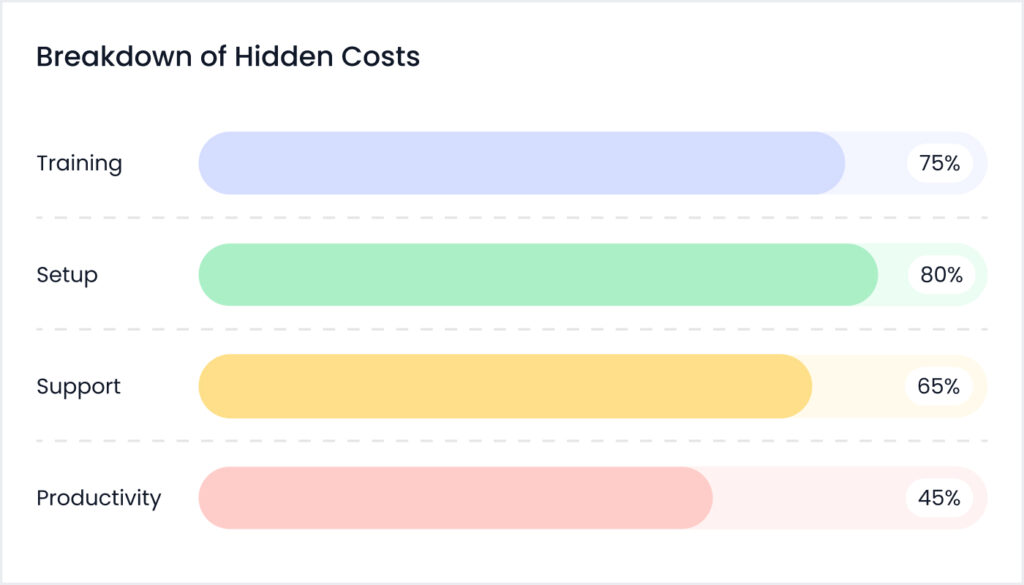
But software cost isn’t just the initial price. It includes training time, setup effort, ongoing support, and the hidden cost of reduced productivity if the system doesn’t work well.

The cheapest option often becomes the most expensive when you factor in real-world usage costs.

Understanding Your School’s Unique Needs

Understanding Your Schools Unique Needs
How to Choose School Management Software That Actually Fits Your School 78

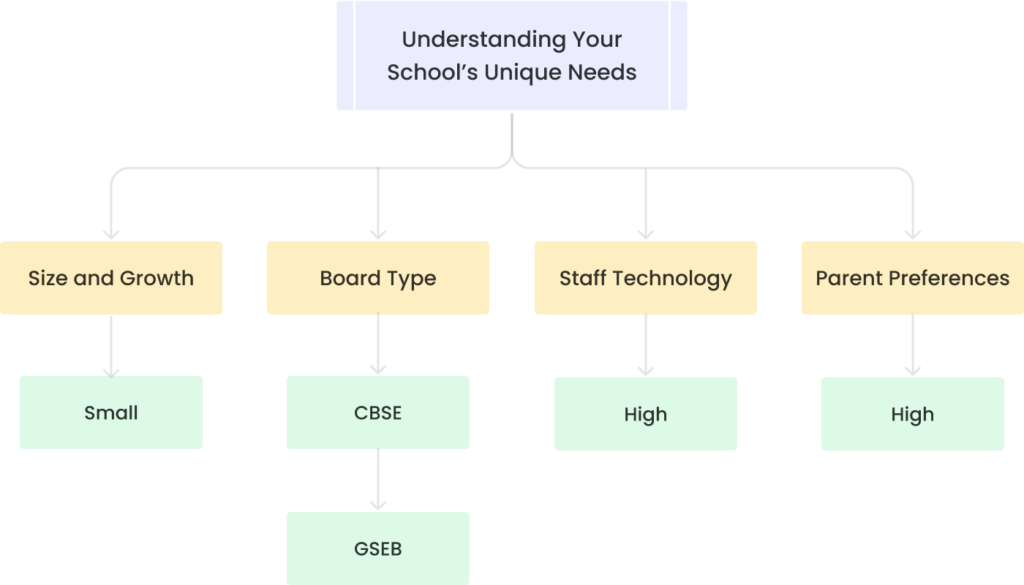
Every school in Gujarat is different. A 200-student CBSE school in Rajkot has different needs than a 1000-student state board school in Surat.

Before looking at any software, you need to understand exactly what your school requires.

Size and Growth Considerations

Current enrollment determines your immediate needs, but growth plans affect long-term software selection

If your school has 300 students now but plans to reach 600 in three years, you need software that scales efficiently. Some systems work well for smaller schools but become sluggish or expensive as enrollment grows.

Ask yourself:

  • What’s our current enrollment?
  • Where do we expect to be in 3-5 years?
  • Are we planning to add new programs or campuses?

Board and Curriculum Requirements

Gujarat schools follow different educational boards, and each has specific requirements for record-keeping, reporting, and compliance.

CBSE schools need software that handles continuous assessment, digital grade books, and specific reporting formats.

GSEB schools need systems aligned with state board requirements, local language support, and state-specific compliance features.

International curriculum schools might need integration with global systems and specialized reporting capabilities.

Generic software designed for “all schools everywhere” often struggles with board-specific requirements. Look for solutions built specifically for Indian schools that understand your curriculum needs.

Staff Technology Comfort Level

This is crucial but often overlooked. Your software choice must match your team’s technology skills.

If your office staff is comfortable with basic computer operations but struggles with complex software, choose user-friendly systems with simple interfaces. There’s no shame in prioritizing ease of use over advanced features.

A school in Rajkot chose sophisticated software with powerful capabilities. But their staff found it so difficult to use that they continued maintaining paper records alongside the digital system – defeating the entire purpose.

Parent Communication Preferences

Gujarat parents have varying levels of smartphone adoption and technical comfort. Understanding your parent community helps determine which communication features matter most.

Urban Rajkot schools might benefit from app-based communication, while schools in smaller towns might need SMS-based systems that work on basic phones.

Don’t assume all parents want the same digital experience. Choose software that offers multiple communication channels.

Essential Features Every Gujarat School Needs

While every school is unique, certain features are essential for smooth operations in the Gujarat education context.

Student Information Management πŸ‘¨β€πŸŽ“

This is the foundation of any school management software. Your system should handle:

  • Complete student profiles with academic history, medical information, and family details
  • Admission management with online application processing and document storage
  • Academic record tracking from admission through graduation
  • Flexible data fields that accommodate your school’s specific information requirements

Test this thoroughly during evaluation. Enter actual student data from your school and see how the system handles real information, including students with complex names or unusual circumstances.

Attendance and Communication

Parents in Gujarat increasingly expect real-time attendance updates. Your software should provide:

  • Quick attendance marking that doesn’t slow down teachers
  • Automatic parent notifications via SMS or app when students are absent
  • Attendance analysis to identify patterns and potential issues
  • Flexible communication for announcements, homework, and individual messages

The communication system should work reliably during monsoon season when internet connectivity might be intermittent.

Fee Management and Financial Tracking

Fee collection is often the most complex part of school administration. Your software needs to handle:

  • Flexible fee structures with different amounts for different student categories
  • Installment payment tracking for families who pay fees monthly or quarterly
  • Late fee calculations with customizable rules and exceptions
  • Receipt generation with proper formatting for tax and record-keeping purposes
  • Financial reporting for budgeting and planning

This module gets the most daily use, so it must be intuitive and reliable.

Academic Management

Your software should support your school’s teaching and assessment approach:

  • Grade book management that matches your assessment system
  • Report card generation with customizable formats
  • Exam scheduling and result processing
  • Homework assignment and tracking capabilities
  • Teacher collaboration tools for lesson planning and student progress discussions

Local Language and Cultural Considerations

Software designed for Gujarat schools should include:

  • Gujarati language support for local communication needs
  • Festival and holiday calendars that reflect Gujarat’s cultural calendar
  • Local compliance features for state education department requirements
  • Regional payment methods integration for fee collection

Questions to Ask Before Making Any Decision

When evaluating school management software options, ask these critical questions to avoid expensive mistakes.

freepik realistic photo of a diverse group of indian profe 94581
How to Choose School Management Software That Actually Fits Your School 79

About Implementation and Training

“How long does implementation typically take for a school our size?”

Realistic implementation timelines for Gujarat schools:

  • Small schools (under 300 students): 2-4 weeks
  • Medium schools (300-700 students): 4-6 weeks
  • Large schools (700+ students): 6-8 weeks

Be suspicious of vendors who promise unrealistic timelines. Proper implementation includes data migration, staff training, and system testing.

“What training and support do you provide after purchase?”

Look for vendors who offer:

  • On-site training for your staff
  • Ongoing technical support in local languages
  • Regular software updates and improvements
  • Help with data backup and security

About Customization and Flexibility

“Can the software be customized to match our school’s specific processes?”

Every school operates slightly differently. Your software should adapt to your processes, not force you to change successful workflows.

“How easy is it to modify fee structures, add new programs, or change reporting formats?”

Schools evolve constantly. Software that’s difficult to modify becomes a constraint on your school’s growth and improvement efforts.

About Integration and Compatibility

“Does the software work well on the devices our staff actually use?”

Test the software on your existing computers, tablets, and smartphones. Don’t assume it will work well just because the demo looked good on the vendor’s high-end equipment.

“Can it integrate with tools we already use successfully?”

If your school uses specific accounting software, communication tools, or academic programs, ensure the new system works well with existing tools.

About Real-World Performance

“Can you provide references from schools similar to ours in Gujarat?”

Speak directly with schools that have used the software for at least one academic year. Ask about challenges they faced and how well the vendor supported them through difficulties.

“What happens if the software doesn’t work as promised?”

Understand the vendor’s refund and support policies before signing any contracts.

Red Flags to Avoid

Red Flags to Avoid 2
How to Choose School Management Software That Actually Fits Your School 80

Certain warning signs indicate software vendors or solutions you should avoid.

Vendor Red Flags

High-pressure sales tactics: “This price is only available if you sign today” usually means the vendor is more interested in making a sale than finding the right solution for your school.

Unwillingness to provide references: Reputable vendors are proud to share success stories from similar schools.

Vague answers about implementation: If the vendor can’t clearly explain how they’ll help you transition from your current system, implementation will likely be problematic.

No local support presence: Software is only as good as the support behind it. Vendors without Gujarat-based support teams often leave schools struggling with technical issues.

Software Red Flags

Overly complex interfaces: If the software requires extensive training for basic operations, daily use will be frustrating for your staff.

Poor mobile experience: Parents and teachers expect mobile-friendly access. Software that works poorly on smartphones will have low adoption rates.

Limited customization options: Generic software that can’t adapt to your school’s processes will force you to change successful workflows.

Hidden additional costs: Watch for charges for basic features like parent communication, data backups, or technical support that should be included in the base price.

The Smart Evaluation Process

The Smart Evaluation Process 2
How to Choose School Management Software That Actually Fits Your School 81

Here’s a step-by-step approach that successful Gujarat schools use to choose the right school management software.

Step 1: Internal Assessment (1-2 weeks)

Before looking at any software, spend time understanding your current situation:

  1. Document your current processes: How do you currently handle admissions, attendance, fee collection, and communication?
  2. Identify pain points: What takes too much time? What causes frequent mistakes? What frustrates staff and parents?
  3. Define success criteria: What would “successful” software implementation look like for your school?
  4. Set a realistic budget: Include not just software costs but implementation, training, and ongoing support expenses.

Step 2: Initial Research (1-2 weeks)

Research potential solutions without contacting vendors yet:

  1. Ask other Gujarat schools about their experiences with different software options
  2. Check online reviews and case studies from schools similar to yours
  3. Create a shortlist of 3-5 vendors that seem promising for your needs

Step 3: Detailed Evaluation (3-4 weeks)

Now contact your shortlisted vendors:

  1. Schedule demos but insist on seeing the software with your actual school data, not generic demo data
  2. Ask for trial access so your staff can test the software with real workflows
  3. Contact reference schools and ask specific questions about their experience
  4. Review contracts carefully with attention to support terms, update policies, and cancellation clauses

Step 4: Final Decision (1 week)

Make your choice based on:

  1. Staff feedback from trial usage
  2. Reference school recommendations
  3. Total cost of ownership over 3-5 years
  4. Vendor support quality and local presence

Making the Implementation Successful

Making the Implementation Successful
How to Choose School Management Software That Actually Fits Your School 82

Choosing the right software is only half the battle. Successful implementation requires careful planning and execution.

Preparing Your Team

Start preparing your staff before the software arrives:

  • Communicate the benefits: Help staff understand how the new system will make their work easier
  • Address concerns: Listen to worries about change and provide reassurance about training and support
  • Designate champions: Identify staff members who are excited about the change and can help encourage others

Data Migration Strategy

Moving from your current system to new software requires careful planning:

  • Clean up existing data before migration to avoid transferring errors into the new system
  • Start with current academic year data and gradually add historical information
  • Test thoroughly with sample data before migrating everything
  • Keep backup systems running until you’re confident the new software works correctly

Training and Adoption

Successful software adoption requires ongoing attention:

  • Train in phases: Start with core features and gradually introduce advanced capabilities
  • Provide ongoing support: Be available to help staff when they encounter difficulties
  • Celebrate successes: Acknowledge when staff members master new features or when the system helps solve problems
  • Gather feedback: Regular check-ins help identify issues before they become major problems

Budgeting for School Management Software

Budgeting for School Management Software
How to Choose School Management Software That Actually Fits Your School 83

Understanding the true cost of school management software helps you budget appropriately and avoid financial surprises.

Typical Cost Structure for Gujarat Schools

Small Schools (under 300 students):

  • Software license: β‚Ή80,000-β‚Ή1.5 lakhs annually
  • Implementation and training: β‚Ή30,000-β‚Ή50,000 (one-time)
  • Ongoing support: Usually included in annual license

Medium Schools (300-700 students):

  • Software license: β‚Ή1.5-β‚Ή3 lakhs annually
  • Implementation and training: β‚Ή50,000-β‚Ή1 lakh (one-time)
  • Customization: β‚Ή20,000-β‚Ή50,000 (if needed)

Large Schools (700+ students):

  • Software license: β‚Ή3-β‚Ή6 lakhs annually
  • Implementation and training: β‚Ή1-β‚Ή2 lakhs (one-time)
  • Customization and integration: β‚Ή50,000-β‚Ή1.5 lakhs

Hidden Costs to Consider

  • Hardware upgrades: Your existing computers might need updates to run new software efficiently
  • Internet connectivity: Cloud-based systems require reliable internet, which might mean upgrading your connection
  • Staff time during transition: Productivity typically drops during the first few weeks as staff learns the new system
  • Parent communication: You might need to educate parents about new communication methods or app usage

ROI Calculation

Compare software costs against savings from improved efficiency:

  • Reduced overtime during busy periods
  • Fewer mistakes requiring correction and re-work
  • Faster fee collection improving cash flow
  • Better parent satisfaction leading to higher retention and referrals

Most Gujarat schools see positive ROI within 12-18 months of implementation.

Customized vs. Ready-Made: What’s Right for Your School?

Customized vs. Ready Made
How to Choose School Management Software That Actually Fits Your School 84

This is one of the most important decisions Gujarat schools face when selecting management software.

Ready-Made Software Solutions

Advantages:

  • Lower initial cost and faster implementation
  • Proven features that work for many schools
  • Regular updates and improvements
  • Established support systems

Disadvantages:

  • Limited customization options
  • Might not fit your school’s unique processes
  • You adapt to the software instead of software adapting to you
  • Less control over future feature development

Best for: Schools with standard processes that are willing to adjust workflows to match software capabilities.

Customized Software Solutions

Advantages:

  • Built specifically for your school’s needs
  • Perfect fit with existing processes
  • Complete control over features and functionality
  • Ability to modify and improve over time

Disadvantages:

  • Higher initial investment
  • Longer development and implementation timeline
  • Requires ongoing technical support relationship
  • Success depends heavily on vendor capability

Best for: Schools with unique requirements, complex processes, or specific needs that ready-made software can’t address.

Making the Right Choice

Consider customized solutions if your school:

  • Has unique academic programs or assessment methods
  • Serves multiple campuses with different needs
  • Has complex fee structures or special student categories
  • Requires integration with existing specialized systems
  • Plans significant growth or program changes

Choose ready-made solutions if your school:

  • Follows standard educational practices
  • Wants to implement quickly with minimal disruption
  • Prefers proven solutions with established track records
  • Has limited budget for software development
  • Wants to focus on education rather than technology management

Future-Proofing Your Software Investment

Future Proofing Your Software Investment
How to Choose School Management Software That Actually Fits Your School 85

Technology changes rapidly, so choose solutions that will serve your school well for years to come.

Scalability Considerations

Your software should grow with your school:

  • Student enrollment growth: Can the system handle 2x or 3x your current enrollment?
  • New programs: Will it support additional academic programs, sports, or extracurricular activities?
  • Multiple campuses: If you expand to additional locations, can the software manage multiple sites?
  • New user types: Can you add users like bus drivers, security staff, or external coaches?

Mobile-first design: Ensure the software works excellently on smartphones and tablets, not just computers.

Cloud-based architecture: Cloud systems offer better reliability, automatic updates, and easier access from multiple locations.

API integration capabilities: Your software should connect easily with other tools you might adopt in the future.

Data analytics features: Look for systems that help you understand trends in student performance, attendance, and parent satisfaction.

Vendor Stability and Support

Choose vendors who will support your school long-term:

  • Financial stability: Established companies with sustainable business models
  • Local presence: Support teams who understand Gujarat schools and can provide assistance in local languages
  • Regular updates: Vendors who continuously improve their software
  • User community: Active user groups where schools share experiences and best practices

Common Implementation Mistakes and How to Avoid Them

Common Implementation Mistakes and How to Avoid Them
How to Choose School Management Software That Actually Fits Your School 86

Learning from others’ mistakes can save your school time, money, and frustration.

Mistake 1: Rushing the Decision

What happens: Schools choose software quickly without proper evaluation, leading to buyer’s remorse and poor adoption.

How to avoid: Allow adequate time for research, trials, and staff input before making final decisions.

Mistake 2: Ignoring Staff Input

What happens: When staff who will use the software daily aren’t involved in selection, they resist adoption and the system fails.

How to avoid: Include key staff members in evaluation process and give them trial access to test functionality.

Mistake 3: Inadequate Training

What happens: Staff continues using old methods because they don’t understand new software capabilities.

How to avoid: Budget adequate time and resources for comprehensive training and ongoing support.

Mistake 4: Poor Data Migration

What happens: Incorrect or incomplete data transfer creates immediate problems and undermines confidence in the new system.

How to avoid: Clean up existing data before migration and test thoroughly with sample information.

Mistake 5: Unrealistic Expectations

What happens: Schools expect immediate perfection and become discouraged when adaptation takes time.

How to avoid: Set realistic timelines for full adoption and celebrate incremental progress.

The Decision Framework: Bringing It All Together

Use this framework to organize your decision-making process and ensure you choose the best school management software for your institution.

Step 1: Define Your Non-Negotiables

List requirements that any software must meet:

  • Must work well with our current internet connectivity
  • Must provide training in Gujarati or Hindi
  • Must integrate with our existing accounting system
  • Must cost less than β‚ΉX annually

Step 2: Create Your Evaluation Scorecard

Rate each software option on important factors:

FactorWeightVendor AVendor BVendor C
Ease of use (staff)25%8/106/109/10
Parent communication features20%7/109/107/10
Fee management capabilities20%9/107/108/10
Implementation support15%8/108/106/10
Total cost of ownership10%7/109/108/10
Customization options10%6/107/109/10

Step 3: Test with Real Scenarios

During evaluation, test each system with actual situations your school faces:

  • Process a real student admission from application to enrollment
  • Handle a complex fee payment scenario (partial payments, late fees, discounts)
  • Generate attendance reports for government compliance
  • Send emergency announcements to all parents
  • Process exam results and generate report cards

Step 4: Check References Thoroughly

When speaking with reference schools, ask specific questions:

“What problems have you encountered, and how did the vendor help solve them?”

“How long did it take your staff to become comfortable with the system?”

“What would you do differently if you were implementing again?”

“Would you choose the same vendor again today?”

Your Next Steps

Choosing the right school management software is one of the most important technology decisions your school will make. The right choice improves efficiency, enhances parent satisfaction, and frees your staff to focus on education.

The wrong choice wastes money, frustrates everyone, and sets your school back months or years.

Start Your Evaluation Process

Begin with honest assessment of your current situation:

  1. Audit your current processes and identify specific pain points
  2. Talk to your staff about what would make their work easier
  3. Survey parents about their communication preferences and needs
  4. Set a realistic budget that includes implementation and training costs
  5. Create your evaluation timeline and stick to it

Remember the Key Principles

  • Fit matters more than features: Choose software that matches your school’s needs, not the one with the most capabilities
  • Staff adoption determines success: The best software in the world is worthless if your team won’t use it
  • Implementation support is crucial: Choose vendors who will help you succeed, not just sell you software
  • Start small and grow: You don’t need to use every feature immediately

Get Expert Guidance

If you’re feeling overwhelmed by the options or unsure about your school’s specific needs, consider getting expert guidance. Many Gujarat schools benefit from consulting with professionals who understand both educational requirements and technology capabilities.

The right school management software can transform your institution’s efficiency and effectiveness. Take time to choose wisely, and your school will benefit for years to come.

Ready to start your software selection process? We can help you understand your options, evaluate vendors, and choose the solution that’s perfect for your Gujarat school’s unique needs.

Contact us for a personalized consultation about school management software options that fit your specific requirements, budget, and goals.

Table of Contents

Categories
Technology in Education

The Hidden Costs of Manual School Administration in Gujarat

Last month, I had coffee with a school principal from Rajkot who told me something that made my jaw drop.

“We calculated our real administrative costs for the first time,” she said, stirring her tea nervously. “The number was so shocking, I thought our accountant made a mistake.

What she discovered isn’t unique to her school. Across Gujarat, school owners and principals are walking around with a massive blind spot – they have no idea how much their “free” manual administration system actually costs them.

And I’m not just talking about paper and ink.

The real costs are hidden in places you’d never think to look. Time that disappears into thin air. Opportunities that slip away while your staff hunts for files. Parents who choose other schools because yours feels disorganized.

Ready for some uncomfortable truths about what manual school administration is really costing your institution?

The Time Theft You Can’t See

Blog 2. The Time Theft You Cant See 1
The Hidden Costs of Manual School Administration in Gujarat 96

Let’s start with the most expensive hidden cost: time theft. Not the kind where employees waste time on their phones, but the kind where inefficient systems steal productive hours from your entire team every single day.

The Daily Document Hunt

Walk into any traditionally-managed school office in Rajkot at 10 AM on a Monday. What do you see? Someone frantically searching through files for a student’s admission form. Another person trying to match fee receipts with student records. A third person manually copying attendance from multiple registers into a summary sheet.

This isn’t productivity. This is expensive time being burned on tasks that should take seconds, not hours.

One school administrator in Ahmedabad tracked her team’s activities for a week. The results? Her three office staff members spent a combined 18 hours just locating and organizing information that parents had requested. Eighteen hours of salary expense for work that adds zero educational value.

The Multiplication Effect

Here’s where it gets really expensive. When your office staff spends time on manual tasks, the delays ripple through your entire operation.

Teachers wait for attendance summaries before they can plan remedial sessions. The accountant can’t prepare fee reports because records are scattered across multiple registers. The principal can’t make informed decisions because gathering basic data takes days instead of minutes.

Every minute your staff spends on manual administration is a minute not spent on activities that actually improve your school’s quality and reputation.

The Overtime Reality

Many Gujarat schools have accepted “busy periods” as normal – admission season, exam time, fee collection months. During these periods, office staff routinely works late, comes in on weekends, and still struggles to keep up.

But here’s the uncomfortable question: How much of that overtime is necessary work, and how much is just compensation for an inefficient system?

Schools with modern management systems report that their “busy periods” are manageable with normal working hours. The extra salary expense, stress, and staff burnout that comes with manual systems isn’t inevitable – it’s a choice.

The Accuracy Crisis That Costs Money

Blog 2. The Accuracy Crisis That Costs Money
The Hidden Costs of Manual School Administration in Gujarat 97

Manual record-keeping isn’t just slow – it’s unreliable. And every mistake costs money in ways that most school owners never calculate.

The Re-work Expense

Imagine this scenario: Your school prepares final exam results manually. After distributing report cards, you discover calculation errors in 15 student records. Now you need to:

  • Recalculate grades manually
  • Print new report cards
  • Call affected parents to explain the mistake
  • Deal with parent complaints and loss of confidence
  • Possibly offer fee concessions to upset families

One mistake cascade like this can easily cost β‚Ή25,000-50,000 in direct expenses, staff time, and goodwill damage. How often can your school afford such incidents?

The Compliance Penalty Risk

Gujarat schools must maintain accurate records for government inspections, board affiliations, and audit requirements. Manual systems make compliance a nightmare because:

  • Records are scattered across multiple files
  • Information consistency is impossible to guarantee
  • Generating required reports takes weeks of staff effort
  • Missing or incorrect data can result in penalties

Schools using manual systems often hire external consultants before major inspections just to organize their records. This “inspection panic” expense can run β‚Ή1-3 lakhs annually for larger schools.

The Parent Trust Factor

When parents ask simple questions and your staff needs to “check and get back to them,” it sends a message about your school’s organizational capability. In today’s competitive education market, parents increasingly choose schools that demonstrate operational excellence.

The hidden cost? Students who don’t enroll because parents perceived your school as less professional than alternatives.

The Opportunity Cost That Kills Growth

This is perhaps the most expensive hidden cost of all – the opportunities your school misses because manual administration consumes resources that should be invested in growth and improvement. u7

Administrative Staff as Education Assets

Your office staff could be valuable contributors to your school’s educational mission. Instead of spending hours on data entry and file management, they could be:

  • Supporting teachers with classroom resource management
  • Coordinating parent engagement programs
  • Managing school events and activities
  • Analyzing student performance trends to help improve teaching
  • Building relationships with the parent community

But when 70% of their time goes to basic administrative tasks, these value-adding activities never happen.

Principal Time Misallocation

School principals should spend their time on educational leadership, strategic planning, and community building. Instead, too many Gujarat principals spend hours weekly on administrative firefighting – checking fee calculations, resolving record discrepancies, and managing communication chaos.

Every hour you spend on administrative problems is an hour not spent on activities that actually improve your school’s reputation and academic results.

Technology Investment Avoidance

Here’s an ironic hidden cost: Many schools avoid investing in management systems because they think they’re “saving money” with manual processes. Meanwhile, they’re losing multiples of that investment every month through inefficiencies.

It’s like refusing to buy a vehicle because you want to save money, then spending more on rickshaw fares than the car payment would have cost.

The Real Numbers Behind Gujarat Schools

Blog 2. The Real Numbers Behind Gujarat Schools 1
The Hidden Costs of Manual School Administration in Gujarat 98

Let’s get specific about what manual administration actually costs. These numbers come from conversations with school administrators across Gujarat who’ve tracked their expenses carefully.

Average School (500 students) Annual Hidden Costs:

  • Staff Time Waste: β‚Ή2.4 lakhs annually
    (3 office staff Γ— 2 hours daily Γ— β‚Ή200/hour Γ— 200 working days)
  • Overtime During Busy Periods: β‚Ή45,000 annually
    (Extra hours during admissions, exams, fee collection)
  • Error Correction and Re-work: β‚Ή75,000 annually
    (Mistakes in records, re-printing, parent complaints)
  • Storage and Stationery: β‚Ή35,000 annually
    (File cabinets, papers, printing, physical space costs)
  • Compliance Preparation: β‚Ή1.2 lakhs annually
    (External help for inspections, audit preparation)

Total Annual Hidden Cost: β‚Ή4.75 lakhs

For larger schools (1000+ students), these costs often exceed β‚Ή8-10 lakhs annually.

Most school owners see only the stationery costs (β‚Ή35,000) and think manual administration is “cheap.” They miss the β‚Ή4.4 lakhs in hidden expenses that don’t appear as line items in their accounts.

The Growth Limitation Factor

Blog 2. The Growth Limitation Factor 1
The Hidden Costs of Manual School Administration in Gujarat 99

Manual administration doesn’t just cost money – it limits your school’s ability to grow and improve.

Enrollment Ceiling Effect

Every school has a point where manual systems become unmanageable. Usually, this happens around 300-400 students. Beyond this point, either:

  • Quality of service drops dramatically (longer response times, more mistakes)
  • Administrative costs skyrocket (more staff needed for same tasks)
  • School leadership gets overwhelmed with operational details

Schools hitting this ceiling often plateau in enrollment not because of lack of demand, but because their systems can’t handle growth efficiently.

Parent Service Quality Decline

As your school grows with manual systems, parent service inevitably suffers. Response times get longer. Mistakes become more frequent. Communication becomes less personalized.

The hidden cost? Families leave for schools that provide better service, and negative word-of-mouth spreads in your community.

Teacher Productivity Impact

Teachers in manually-managed schools spend significant time on administrative tasks – filling multiple registers, preparing handwritten reports, tracking student progress across various forms.

This administrative burden affects teaching quality and job satisfaction. Good teachers eventually seek positions at schools with better systems, and you face constant recruitment and training costs.

What Efficient Schools in Gujarat Are Doing Differently

Schools that have moved beyond manual administration report dramatic cost savings and operational improvements.

Time Recovery Success Stories

A school in Surat reported that after implementing a management system:

  • Office staff time on routine tasks decreased by 60%
  • Principal’s time on administrative issues dropped by 40%
  • Teacher time on non-teaching activities reduced by 30%

The time savings alone justified their system investment within 8 months.

Accuracy and Compliance Benefits

Schools with digital systems report:

  • 95% reduction in record-keeping errors
  • Compliance preparation time cut from weeks to days
  • Zero penalties or compliance issues in recent inspections
  • Parent complaints about information accuracy virtually eliminated

Growth Enablement Results

Schools that eliminated manual administration bottlenecks often experience:

  • 30-50% enrollment growth within 2 years
  • Improved parent satisfaction scores
  • Better teacher retention rates
  • Higher staff productivity and job satisfaction

The Investment vs. Cost Reality Check

Blog 2. The Investment vs. Cost Reality Check
The Hidden Costs of Manual School Administration in Gujarat 100

Many school owners compare the cost of management systems against their current stationery expenses and conclude that manual systems are “cheaper.

This comparison is like comparing the cost of a telephone against the cost of paper and saying paper is cheaper for communication.

True Cost Comparison (Annual):

Manual Administration System:

  • Visible costs: β‚Ή35,000 (stationery, storage)
  • Hidden costs: β‚Ή4.75 lakhs (time, errors, opportunity costs)
  • Total: β‚Ή5.1 lakhs annually

Digital Management System:

  • Software cost: β‚Ή1.2 lakhs annually
  • Training and setup: β‚Ή50,000 (one-time)
  • Total: β‚Ή1.7 lakhs annually (after first year: β‚Ή1.2 lakhs)

The “expensive” digital system actually costs less than one-third of the “cheap” manual system.

Making the Business Case for Change

Blog 2. Your Schools Financial Future 1 1
The Hidden Costs of Manual School Administration in Gujarat 101

If you’re ready to stop hemorrhaging money through inefficient administration, here’s how to approach the transition:

Calculate Your Real Costs

Track your administrative expenses for one month:

  • Staff time spent on manual tasks (hours Γ— hourly rate)
  • Overtime during busy periods
  • Error correction and re-work
  • Parent complaints and service recovery
  • Missed opportunities due to slow response times

Most school owners are shocked when they see the real numbers.

Start with High-Impact Areas

You don’t need to digitize everything overnight. Begin with the most expensive manual processes:

  • Student admission and record management
  • Fee collection and tracking
  • Attendance management and parent communication
  • Exam result processing and report generation

Measure Improvement

Track the same metrics after implementing digital systems. Most schools see 50-70% cost reduction in administrative processes within the first year.

The Competitive Reality in Gujarat

Blog 2. The Competitive Reality in Gujarat
The Hidden Costs of Manual School Administration in Gujarat 102

While you’re calculating costs and considering options, your competition isn’t waiting. Progressive schools across Gujarat are gaining operational advantages that translate into competitive advantages.

Parents increasingly choose schools based on:

  • Professional communication and responsiveness
  • Transparent fee and academic information
  • Efficient handling of routine requests
  • Modern, organized administrative processes

Schools that cling to manual systems are being perceived as outdated and less capable, regardless of their academic quality.

Your School’s Financial Future

Blog 2. Your Schools Financial Future 2
The Hidden Costs of Manual School Administration in Gujarat 103

The question isn’t whether manual school administration is costing you money – it’s whether you’ll continue paying these hidden costs or invest in solutions that eliminate them.

Every month you delay addressing administrative inefficiencies is another month of:

  • β‚Ή40,000+ in hidden costs for average schools
  • Staff frustration and potential turnover
  • Parent dissatisfaction and enrollment risk
  • Missed opportunities for growth and improvement

The technology exists. The benefits are proven. The ROI is clear.

The only question is: How much longer will your school pay the hidden tax of manual administration?

Taking the First Step

If these hidden costs sound familiar, you’re not alone. Most Gujarat schools are experiencing the same inefficiencies and expense drains.

The good news? The solution is straightforward, and the benefits start showing within weeks of implementation.

Ready to discover exactly how much your current system is really costing and what you could save with better alternatives?

Calculate your school’s hidden administrative costs, explore digital solutions designed for Gujarat schools, and learn from institutions that have already made the transition successfully.

Your school’s financial health and competitive future depend on the administrative choices you make today. The hidden costs are real, measurable, and completely avoidable.

Contact us to discuss a customized analysis of your school’s administrative expenses and learn how other Gujarat schools are transforming their operations while saving money.

Ready to stop paying the hidden tax of inefficient administration? Let’s explore how digital school management can transform your costs into competitive advantages.

Categories
Insights for School Leaders

How to Improve Parent Communication with School ERP

Last week, I was talking to Rajesh sir, a principal from a well-known school in Rajkot. He shared something that made me pause: “Parents today expect to know everything that happens with their child at school, but our current system makes it impossible to keep them updated properly.”

Sound familiar?

If you’re a school principal in Rajkot or anywhere in Gujarat, you’ve probably faced this challenge. Parents want instant updates about their child’s attendance, assignments, exam results, and school announcements. But with traditional communication methods, keeping 500+ parents informed and engaged feels like an uphill battle.

Here’s the good news: School ERP systems have completely transformed how progressive schools in Gujarat communicate with parents. With a focus on Parent Communication with School ERP, the results? Better parent satisfaction, fewer complaints, and stronger school-parent relationships.

The Parent Communication Challenge Every Rajkot School Faces

The Parent Communication Challenge Every Rajkot School Faces 1
How to Improve Parent Communication with School ERP 114
Enhancing Parent Communication with School ERP

Effective communication is crucial for fostering a positive school environment. Adopting Parent Communication with School ERP strategies can greatly enhance the interaction between schools and parents.

Let’s be honest about what parent communication looks like in most Rajkot schools today.

The WhatsApp Group Chaos

Most schools rely heavily on WhatsApp groups for parent communication. But if you’ve tried managing multiple WhatsApp groups for different classes, you know the problems:

  • Message overload: Parents get overwhelmed with 50+ messages daily
  • Important updates get buried: Exam schedules disappear under casual conversations
  • No proper records: Try finding that fee payment reminder from two months ago
  • Privacy concerns: Parent phone numbers visible to everyone
  • Time waste: Teachers spend hours managing groups instead of teaching

The Paper Notice Nightmare

Traditional paper notices have their own set of problems:

“We sent home important exam schedule notices, but only 60% of parents actually received them. Kids either forgot to hand them over or the papers got lost in their bags.” – Mrs. Patel, Rajkot School Principal

  • Papers get lost or forgotten
  • No confirmation that parents received important information
  • Printing and distribution costs add up
  • No way to track which parents saw which notices

The Phone Call Marathon

Many schools still rely on calling parents individually for important updates. But this approach has serious limitations:

  • Time-consuming: Calling 30 parents takes 2-3 hours
  • Business hours only: Many working parents can’t answer during school hours
  • No written record: “I never got that call” becomes a common complaint
  • Staff burnout: Teachers exhausted from administrative calls

What Gujarat Parents Actually Want from School Communication

Before jumping into solutions, let’s understand what parents in Rajkot and Gujarat really want from school communication.

What Gujarat Parents Actually Want from School Communication 1 1
How to Improve Parent Communication with School ERP 115

Real-Time Updates, Not Weekly Summaries

Today’s parents don’t want to wait until PTM to know how their child is doing. They want to know:

  • Did my child reach school safely today?
  • What homework was assigned in each subject?
  • How did they perform in yesterday’s test?
  • Are there any upcoming events I should know about?

Personalized Information, Not Generic Announcements

Parents want information specific to their child, not general school announcements mixed with irrelevant updates for other classes.

Two-Way Communication, Not One-Way Broadcasting

Modern parents want to be able to:

  • Ask questions about their child’s progress
  • Inform about child’s absence or health issues
  • Schedule meetings with teachers
  • Get quick responses to urgent concerns

How School ERP Transforms Parent Communication

A well-designed school ERP system addresses every communication challenge mentioned above. Here’s how:

How School ERP Transforms Parent Communication 1
How to Improve Parent Communication with School ERP 116

Instant, Automated Updates

Instead of manually sending attendance messages, the ERP automatically notifies parents when their child arrives at school and when they leave. No more wondering “Did my child reach school safely?”

Real Example: At 8:15 AM, Mrs. Sharma receives a notification: “Aarav has arrived at school safely.” At 3:30 PM, another message: “Aarav has boarded bus #12 for home.” Simple, automatic, peace of mind.

Personalized Parent Portals

Each parent gets access to a personalized dashboard showing only their child’s information:

  • Academic Progress: Real-time grades, test scores, assignment submissions
  • Attendance History: Daily attendance with reasons for any absences
  • Fee Management: Outstanding dues, payment history, online payment options
  • Timetable: Daily schedule, exam dates, holiday calendar
  • Announcements: Class-specific and school-wide notifications

Multi-Channel Communication

Good school ERPs don’t rely on just one communication method. They use:

  • SMS alerts for urgent information
  • App notifications for daily updates
  • Email for detailed communications
  • In-app messaging for two-way conversations

Practical Implementation Guide for Rajkot Schools

Ready to improve your parent communication? Here’s your step-by-step implementation guide:

Practical Implementation Guide for Rajkot Schools 2
How to Improve Parent Communication with School ERP 117

Phase 1: Foundation Setup (Week 1-2)

Choose the Right ERP Features

Not all school ERP systems are created equal. For effective parent communication in Gujarat schools, ensure your system includes:

  • Mobile app for parents (Android & iOS)
  • SMS integration with local telecom providers
  • Multi-language support (English, Hindi, Gujarati)
  • Offline capability for areas with poor internet
  • Fee payment gateway integration

Collect Parent Information

Create a comprehensive database with:

  • Primary and secondary parent contact numbers
  • Email addresses (many Gujarat parents now use email)
  • Preferred communication language
  • Emergency contact details
  • Communication preferences (SMS, app, email)

Phase 2: Training and Onboarding (Week 3-4)

Staff Training

Your success depends on how well your staff adapts to the new system:

  • Teachers: How to mark attendance, update assignments, send individual messages
  • Admin staff: How to send announcements, manage fee communications, handle parent queries
  • Management: How to monitor communication effectiveness and parent satisfaction

Parent Onboarding

Don’t assume parents will figure out the system on their own:

  • Organize parent orientation sessions
  • Create simple video tutorials in local languages
  • Provide printed quick-reference guides
  • Set up a help desk for the first month

Phase 3: Gradual Rollout (Week 5-8)

Start with Basic Features

Don’t overwhelm parents with all features at once:

  1. Week 5: Attendance notifications only
  2. Week 6: Add homework assignments
  3. Week 7: Include exam schedules and results
  4. Week 8: Full communication features

Monitor and Adjust

Track these metrics to ensure success:

  • Parent app adoption rate
  • Message delivery and read rates
  • Parent satisfaction surveys
  • Reduction in phone calls to school office
  • Teacher time savings

Real Success Stories from Gujarat Schools

Case Study 1: Improved Attendance Communication

“Before ERP, we had to call parents every time a child was absent. Now, if a child doesn’t arrive by 9 AM, parents automatically get an SMS. Our office phone calls reduced by 70%.” – Mr. Mehta, Principal, Rajkot

Case Study 2: Better Parent Engagement

“Parent-teacher meeting attendance increased from 60% to 85% after we started sending personalized progress reports through the app. Parents come prepared with specific questions about their child’s performance.” – Mrs. Dave, Surat School

Case Study 3: Streamlined Fee Collection

“Fee collection time reduced from 3 months to 3 weeks. Parents get automatic reminders, can pay online, and receive instant receipts. No more standing in queues or lost fee receipts.” – Dr. Shah, Ahmedabad School

Common Mistakes to Avoid

Learn from the experience of other Gujarat schools. Avoid these common implementation mistakes:

Common Mistakes to Avoid
How to Improve Parent Communication with School ERP 118

Mistake 1: Information Overload

What happens: Schools send too many notifications, causing parents to ignore all messages.

Solution: Create communication guidelines. Send only necessary, relevant information.

Mistake 2: One-Size-Fits-All Approach

What happens: Sending the same messages to all parents regardless of their child’s class or needs.

Solution: Segment communication by class, activity, or student performance.

Mistake 3: Ignoring Non-Tech-Savvy Parents

What happens: Some parents, especially grandparents, get left out of digital communication.

Solution: Maintain multiple communication channels including phone calls for important updates.

Mistake 4: Poor Crisis Communication

What happens: During emergencies (sudden holidays due to bandh, weather issues), schools fail to communicate quickly.
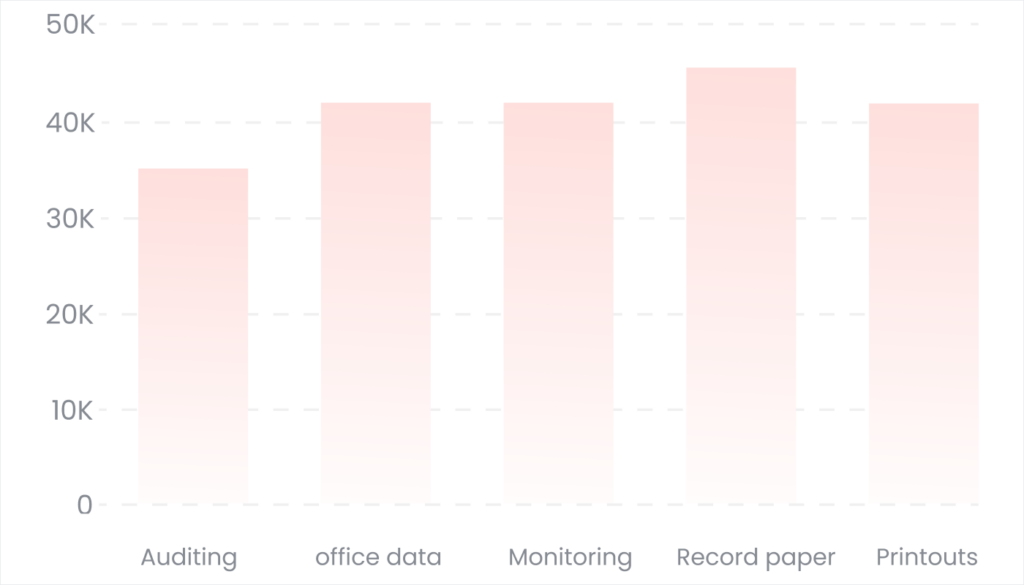
Solution: Set up emergency broadcast features for instant communication to all parents.

Advanced Communication Strategies

Once your basic ERP communication is running smoothly, consider these advanced strategies:

Advanced Communication Strategies
How to Improve Parent Communication with School ERP 119

Behavioral Insights and Analytics

Modern ERPs provide valuable insights about parent engagement:

  • Which types of messages get highest open rates
  • Optimal timing for different types of communications
  • Parents who need additional engagement support
  • Communication preferences by demographic

Automated Communication Workflows

Set up intelligent automation for routine communications:

  • Birthday reminders: Automatic wishes for students and parents
  • Achievement celebrations: Auto-congratulations for good performance
  • Absence follow-ups: Automatic care messages for extended absences
  • Fee reminders: Graduated reminder sequence before due dates

Interactive Features

Enable two-way communication with features like:

  • Parent polls for school events and policies
  • Digital permission slips
  • Online parent-teacher meeting scheduling
  • Virtual classroom participation for working parents

Measuring Communication Success

How do you know if your new communication system is working? Track these key metrics:

Measuring Communication Success 2
How to Improve Parent Communication with School ERP 120

Quantitative Metrics

  • Message delivery rate: What percentage of messages reach parents?
  • App adoption rate: How many parents actively use the mobile app?
  • Response time: How quickly do parents respond to important communications?
  • Phone call reduction: Decrease in calls to school office
  • PTM attendance: Improvement in parent-teacher meeting participation

Qualitative Metrics

  • Parent satisfaction surveys
  • Teacher feedback on communication efficiency
  • Parent testimonials and word-of-mouth referrals
  • Reduction in communication-related complaints

Choosing the Right ERP Partner for Your School

Not all ERP providers understand the unique needs of Gujarat schools. Here’s what to look for:

Choosing the Right ERP Partner for Your School
How to Improve Parent Communication with School ERP 121

Local Understanding

  • Experience with Indian education system requirements
  • Understanding of local festivals and holiday patterns
  • Support for regional languages
  • Knowledge of state board compliance needs

Technical Capabilities

  • Mobile-first design (most parents use smartphones)
  • Offline functionality for poor connectivity areas
  • Integration with local payment gateways
  • Robust security for student data protection

Support and Training

  • Local language support team
  • On-site training availability
  • Regular system updates and maintenance
  • 24/7 technical support during critical periods

Future-Proofing Your Communication Strategy

Technology keeps evolving. Here’s how to ensure your communication system stays relevant:

Future Proofing Your Communication Strategy 1
How to Improve Parent Communication with School ERP 122
  • Voice messages: Many parents prefer listening to voice notes
  • Video updates: Teachers sending short video progress reports
  • AI-powered insights: Predictive analytics for student performance
  • Blockchain records: Permanent, tamper-proof academic records

Preparing for Change

  • Choose ERP systems with regular update cycles
  • Invest in staff training for new technologies
  • Stay connected with other progressive schools in Gujarat
  • Regularly survey parents about their evolving communication needs

Taking Action: Your Next Steps

Ready to transform your school’s parent communication? Here’s your action plan:

This Week:

  1. Survey your current parent communication challenges
  2. Calculate time spent on manual communication tasks
  3. Research ERP providers with strong communication features
  4. Talk to other principals who’ve implemented similar systems

Next Month:

  1. Demo 2-3 different ERP systems
  2. Calculate ROI based on your school’s specific needs
  3. Plan your implementation timeline
  4. Prepare your team for the transition

In 3 Months:

  1. Have your new communication system up and running
  2. Complete parent onboarding and training
  3. Monitor initial results and parent feedback
  4. Fine-tune settings based on real usage data

In Summary:

Improving parent communication isn’t just about adopting new technology – it’s about building stronger relationships between your school and families. When parents feel informed, involved, and valued, they become your school’s biggest advocates.

Schools across Rajkot and Gujarat that have made this transition report not just operational improvements, but fundamental changes in their school culture. Teachers spend more time teaching, parents feel more connected, and students benefit from the stronger school-home partnership.

The question isn’t whether you should improve your parent communication – it’s whether you’ll lead this change or be forced to catch up later.

Your parents are ready for better communication. Your teachers want simpler processes. Your school deserves the efficiency and professionalism that modern ERP systems provide.

The transformation starts with a single decision: We can do better for our families.

Categories
students

Participate in Discussion Forums / Class Bulletin Board

πŸ’¬ Sometimes, students just need to ask a question β€” without raising a hand.

With iSchoolCloud’s optional class forum, schools give students a structured, teacher-led space to discuss what matters.

❓ It could be a doubt,
πŸ”” a reminder,
πŸ”— a resource link,
πŸ’‘ or an idea worth sharing.

And it’s not chaotic.
🚫 It’s not public.
βœ… It’s calm, private, and built with student safety πŸ›‘οΈ and simplicity βš™οΈ in mind.

🧡 This isn’t a chat room.
πŸ“Œ It’s a bulletin board where learning continues β€” even after class.

🚷 No distractions.
🚫 No judgment.
βœ… Just conversation that helps.

Categories
students

Activity and Skill Development Progress Tracker

πŸ“Š Marks matter β€” but so does character.

With iSchoolCloud’s Skill and Activity Tracker, schools finally have a structured way to monitor how students are growing as people πŸ‘§πŸ§‘, not just as performers πŸ….

πŸ‘©β€πŸ« Teachers can record progress in core life skills β€”
πŸ’¬ Confidence, 🀝 Teamwork, 🧠 Leadership, 🎨 Creativity β€” along with structured remarks.

πŸ‘¨β€πŸ‘©β€πŸ‘§β€πŸ‘¦ Students and parents can see steady progress over the year, πŸŽ‰ celebrate growth, and πŸ€” understand where support is needed.

🌟 It brings visibility to talents that don’t always show up in tests.
πŸ“š And it teaches students that growth isn’t just academic β€” it’s personal.

πŸ’– Because at the end of the year, who they’ve become matters just as much as what they’ve scored.

Categories
students

View Birthday / Celebration Notices

🏫 School life isn’t just about marks and deadlines β€” it’s also about memories.

πŸŽ‰ iSchoolCloud creates a safe, simple space to celebrate small joys.

πŸŽ‚ Birthdays, πŸ† classroom wins, and πŸͺ” festival greetings can be shared digitally β€” with just the right balance of warmth πŸ’› and privacy πŸ”’.

πŸ“΅ It’s not a social feed.
πŸ”‡ It’s not noisy.
πŸ’Œ It’s just a quiet way to acknowledge someone’s special day β€” with a kind message πŸ’¬, a class card πŸ–ΌοΈ, or a cheerful post 😊.

πŸ™‹β€β™‚οΈ And if a student or parent prefers privacy?
βœ… That’s respected, too.

🌟 A little cheer, without distraction.
🌱 A little attention, without pressure.

Categories
students

Access Important Circulars

πŸ“„ Important information shouldn’t depend on paper or passing it around.

With iSchoolCloud, students no longer miss updates because someone forgot to mention it.

πŸ“’ All circulars β€” be it for πŸ“š exams, πŸŽ‰ events, πŸ“ rules, πŸ“Œ notices, or πŸ“ƒ policy changes β€” are uploaded by school authorities and visible to each student in a clean, date-tagged format.

🚫 No more β€œI didn’t know.”
🚫 No more β€œI wasn’t told.”

πŸ“² Everything is right there β€” with
πŸ”” reminders,
⬇️ download options, and
πŸ—‚οΈ archived access.

🀝 It’s respectful.
πŸ•’ It’s timely.
βœ… And it saves hours of confusion.

βœ… Section 6: Call to Action

πŸ”“ Let Students Access What Matters

πŸ“ž Contact
πŸ’¬ Ask us how iSchoolCloud keeps circulars visible, timely, and secure β€” for every class.

five-rating-star 4.9 5000 Total Reviews

Join Our Inner Circle for Special Perks

A free guide/ebook on educational strategies or technology integration
attedance report daily work progress