How to Choose School Management Software That Actually Fits Your School
 August 11, 2025


Table of Contents
Discover the essential factors Gujarat school principals must consider when selecting school management software. Learn how to avoid common mistakes and find ERP solutions that match your Rajkot school ‘ s unique needs, budget, and goals.
Last Tuesday, I got a call from a frustrated principal in Rajkot.
“We spent ₹3 lakhs on school software six months ago,” she said, her voice tired. “But nobody uses it. The teachers hate it, parents can’t figure it out, and I’m back to managing everything manually.”
Her story isn’t unique. Across Gujarat, schools are making expensive mistakes when choosing school management software. They buy systems that look impressive in demos but fail miserably in real-world use.
The problem isn’t that good software doesn’t exist. The problem is that most schools approach software selection like buying a car – they focus on features and price instead of asking the most important question: “Will this actually work for our school?”
After talking to dozens of Gujarat school principals who’ve been through this process (both successfully and unsuccessfully), I’ve learned what really matters when choosing school management software.
Here’s everything you need to know to avoid costly mistakes and find a system that your school will actually use.
Why Most Schools Choose the Wrong Software
Before we talk about how to choose correctly, let’s understand why so many schools get it wrong.
The Feature Trap
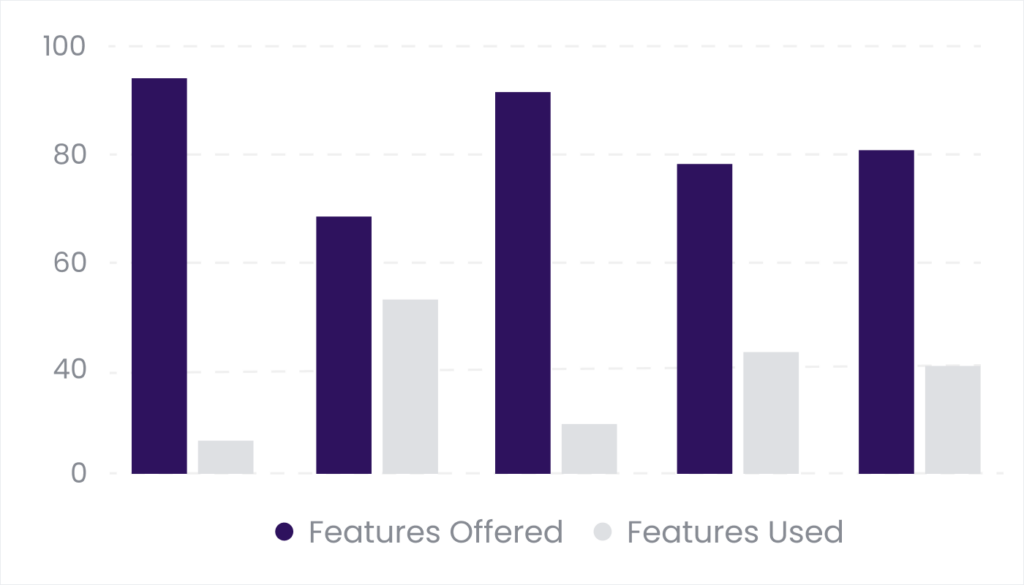
Sales representatives love showing off impressive feature lists. “Look, our software has 47 different modules!” they say proudly.
But here’s what they don’t tell you: More features often mean more complexity. Your office staff doesn’t need 47 modules – they need 5-7 modules that work perfectly for your school’s daily operations.
A school in Ahmedabad bought software with every imaginable feature. Six months later, they were only using basic attendance and fee modules. The rest of the features sat unused, making the system unnecessarily complicated for everyone.
The Demo Deception
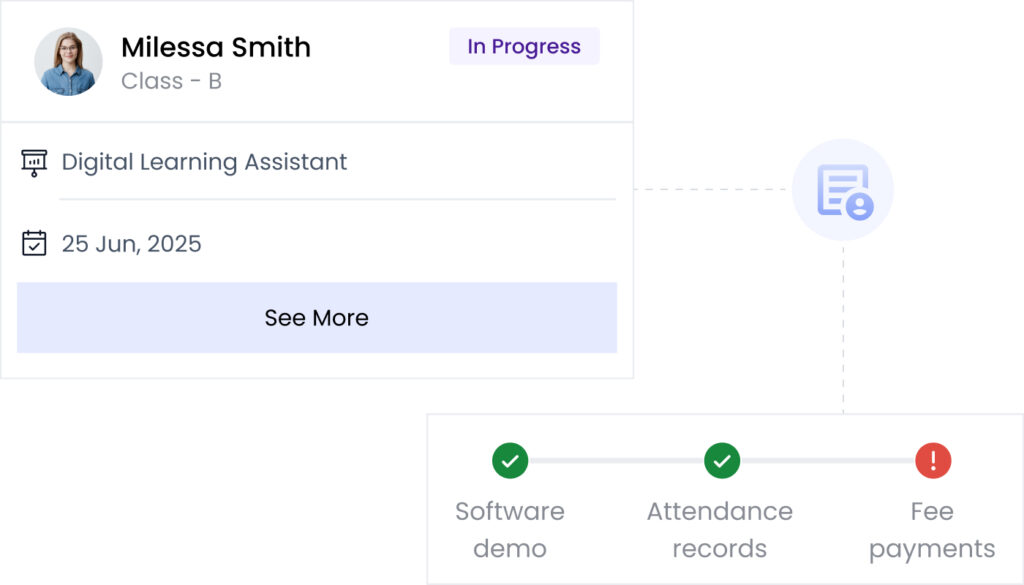
Software demos are like arranged marriages – everything looks perfect until you start living together.
During demos, sales teams use perfect sample data. Student names are all spelled correctly. Fee payments are up to date. Attendance records are complete. Everything works smoothly because the demo environment is designed to impress, not reflect reality.
Real school data is messy. Students have nickname variations. Parents pay fees in installments. Attendance patterns are irregular. The software that handles demo data beautifully might struggle with your actual information.
The Price Focus Mistake
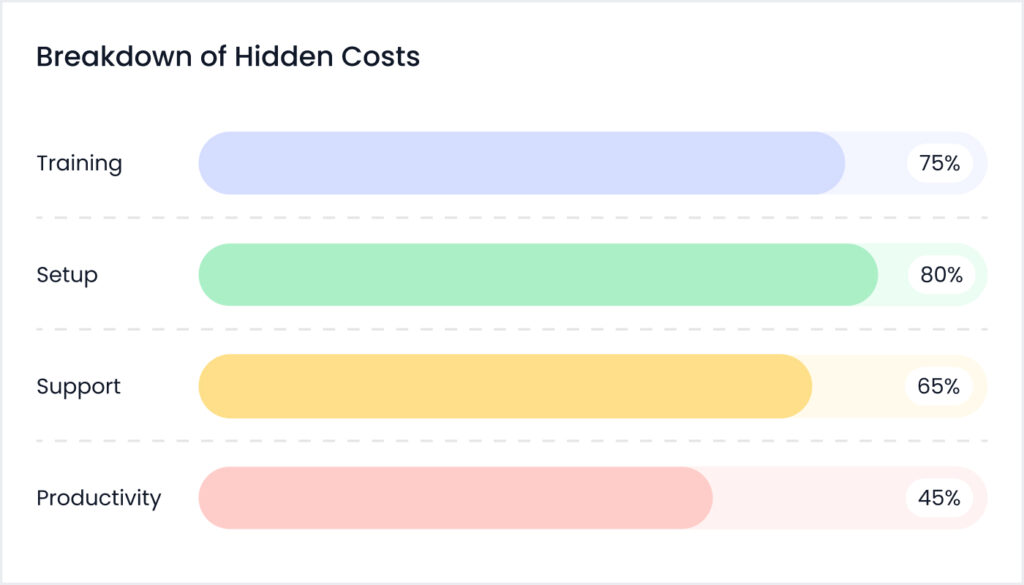
Many Gujarat schools make decisions based primarily on cost. “This one costs ₹50,000 less, so we’ll take it.”
But software cost isn’t just the initial price. It includes training time, setup effort, ongoing support, and the hidden cost of reduced productivity if the system doesn’t work well.
The cheapest option often becomes the most expensive when you factor in real-world usage costs.
Understanding Your School’s Unique Needs
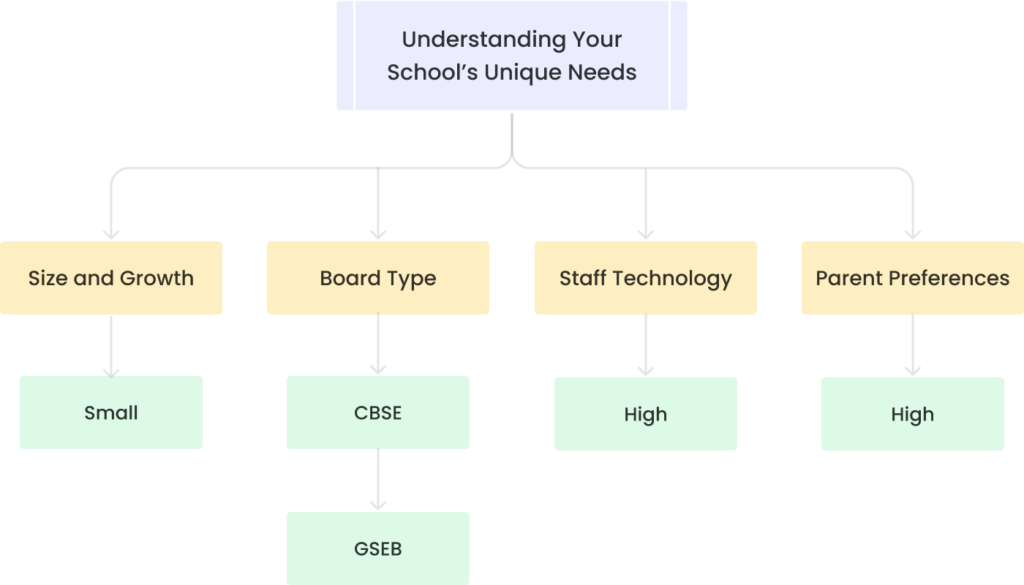
Every school in Gujarat is different. A 200-student CBSE school in Rajkot has different needs than a 1000-student state board school in Surat.
Before looking at any software, you need to understand exactly what your school requires.
Size and Growth Considerations
Current enrollment determines your immediate needs, but growth plans affect long-term software selection
If your school has 300 students now but plans to reach 600 in three years, you need software that scales efficiently. Some systems work well for smaller schools but become sluggish or expensive as enrollment grows.
Ask yourself:
- What’s our current enrollment?
- Where do we expect to be in 3-5 years?
- Are we planning to add new programs or campuses?
Board and Curriculum Requirements
Gujarat schools follow different educational boards, and each has specific requirements for record-keeping, reporting, and compliance.
CBSE schools need software that handles continuous assessment, digital grade books, and specific reporting formats.
GSEB schools need systems aligned with state board requirements, local language support, and state-specific compliance features.
International curriculum schools might need integration with global systems and specialized reporting capabilities.
Generic software designed for “all schools everywhere” often struggles with board-specific requirements. Look for solutions built specifically for Indian schools that understand your curriculum needs.
Staff Technology Comfort Level
This is crucial but often overlooked. Your software choice must match your team’s technology skills.
If your office staff is comfortable with basic computer operations but struggles with complex software, choose user-friendly systems with simple interfaces. There’s no shame in prioritizing ease of use over advanced features.
A school in Rajkot chose sophisticated software with powerful capabilities. But their staff found it so difficult to use that they continued maintaining paper records alongside the digital system – defeating the entire purpose.
Parent Communication Preferences
Gujarat parents have varying levels of smartphone adoption and technical comfort. Understanding your parent community helps determine which communication features matter most.
Urban Rajkot schools might benefit from app-based communication, while schools in smaller towns might need SMS-based systems that work on basic phones.
Don’t assume all parents want the same digital experience. Choose software that offers multiple communication channels.
Essential Features Every Gujarat School Needs
While every school is unique, certain features are essential for smooth operations in the Gujarat education context.
Student Information Management 👨🎓
This is the foundation of any school management software. Your system should handle:
- Complete student profiles with academic history, medical information, and family details
- Admission management with online application processing and document storage
- Academic record tracking from admission through graduation
- Flexible data fields that accommodate your school’s specific information requirements
Test this thoroughly during evaluation. Enter actual student data from your school and see how the system handles real information, including students with complex names or unusual circumstances.
Attendance and Communication
Parents in Gujarat increasingly expect real-time attendance updates. Your software should provide:
- Quick attendance marking that doesn’t slow down teachers
- Automatic parent notifications via SMS or app when students are absent
- Attendance analysis to identify patterns and potential issues
- Flexible communication for announcements, homework, and individual messages
The communication system should work reliably during monsoon season when internet connectivity might be intermittent.
Fee Management and Financial Tracking
Fee collection is often the most complex part of school administration. Your software needs to handle:
- Flexible fee structures with different amounts for different student categories
- Installment payment tracking for families who pay fees monthly or quarterly
- Late fee calculations with customizable rules and exceptions
- Receipt generation with proper formatting for tax and record-keeping purposes
- Financial reporting for budgeting and planning
This module gets the most daily use, so it must be intuitive and reliable.
Academic Management
Your software should support your school’s teaching and assessment approach:
- Grade book management that matches your assessment system
- Report card generation with customizable formats
- Exam scheduling and result processing
- Homework assignment and tracking capabilities
- Teacher collaboration tools for lesson planning and student progress discussions
Local Language and Cultural Considerations
Software designed for Gujarat schools should include:
- Gujarati language support for local communication needs
- Festival and holiday calendars that reflect Gujarat’s cultural calendar
- Local compliance features for state education department requirements
- Regional payment methods integration for fee collection
Questions to Ask Before Making Any Decision
When evaluating school management software options, ask these critical questions to avoid expensive mistakes.

About Implementation and Training
“How long does implementation typically take for a school our size?”
Realistic implementation timelines for Gujarat schools:
- Small schools (under 300 students): 2-4 weeks
- Medium schools (300-700 students): 4-6 weeks
- Large schools (700+ students): 6-8 weeks
Be suspicious of vendors who promise unrealistic timelines. Proper implementation includes data migration, staff training, and system testing.
“What training and support do you provide after purchase?”
Look for vendors who offer:
- On-site training for your staff
- Ongoing technical support in local languages
- Regular software updates and improvements
- Help with data backup and security
About Customization and Flexibility
“Can the software be customized to match our school’s specific processes?”
Every school operates slightly differently. Your software should adapt to your processes, not force you to change successful workflows.
“How easy is it to modify fee structures, add new programs, or change reporting formats?”
Schools evolve constantly. Software that’s difficult to modify becomes a constraint on your school’s growth and improvement efforts.
About Integration and Compatibility
“Does the software work well on the devices our staff actually use?”
Test the software on your existing computers, tablets, and smartphones. Don’t assume it will work well just because the demo looked good on the vendor’s high-end equipment.
“Can it integrate with tools we already use successfully?”
If your school uses specific accounting software, communication tools, or academic programs, ensure the new system works well with existing tools.
About Real-World Performance
“Can you provide references from schools similar to ours in Gujarat?”
Speak directly with schools that have used the software for at least one academic year. Ask about challenges they faced and how well the vendor supported them through difficulties.
“What happens if the software doesn’t work as promised?”
Understand the vendor’s refund and support policies before signing any contracts.
Red Flags to Avoid
Certain warning signs indicate software vendors or solutions you should avoid.
Vendor Red Flags
High-pressure sales tactics: “This price is only available if you sign today” usually means the vendor is more interested in making a sale than finding the right solution for your school.
Unwillingness to provide references: Reputable vendors are proud to share success stories from similar schools.
Vague answers about implementation: If the vendor can’t clearly explain how they’ll help you transition from your current system, implementation will likely be problematic.
No local support presence: Software is only as good as the support behind it. Vendors without Gujarat-based support teams often leave schools struggling with technical issues.
Software Red Flags
Overly complex interfaces: If the software requires extensive training for basic operations, daily use will be frustrating for your staff.
Poor mobile experience: Parents and teachers expect mobile-friendly access. Software that works poorly on smartphones will have low adoption rates.
Limited customization options: Generic software that can’t adapt to your school’s processes will force you to change successful workflows.
Hidden additional costs: Watch for charges for basic features like parent communication, data backups, or technical support that should be included in the base price.
The Smart Evaluation Process

Here’s a step-by-step approach that successful Gujarat schools use to choose the right school management software.
Step 1: Internal Assessment (1-2 weeks)
Before looking at any software, spend time understanding your current situation:
- Document your current processes: How do you currently handle admissions, attendance, fee collection, and communication?
- Identify pain points: What takes too much time? What causes frequent mistakes? What frustrates staff and parents?
- Define success criteria: What would “successful” software implementation look like for your school?
- Set a realistic budget: Include not just software costs but implementation, training, and ongoing support expenses.
Step 2: Initial Research (1-2 weeks)
Research potential solutions without contacting vendors yet:
- Ask other Gujarat schools about their experiences with different software options
- Check online reviews and case studies from schools similar to yours
- Create a shortlist of 3-5 vendors that seem promising for your needs
Step 3: Detailed Evaluation (3-4 weeks)
Now contact your shortlisted vendors:
- Schedule demos but insist on seeing the software with your actual school data, not generic demo data
- Ask for trial access so your staff can test the software with real workflows
- Contact reference schools and ask specific questions about their experience
- Review contracts carefully with attention to support terms, update policies, and cancellation clauses
Step 4: Final Decision (1 week)
Make your choice based on:
- Staff feedback from trial usage
- Reference school recommendations
- Total cost of ownership over 3-5 years
- Vendor support quality and local presence
Making the Implementation Successful

Choosing the right software is only half the battle. Successful implementation requires careful planning and execution.
Preparing Your Team
Start preparing your staff before the software arrives:
- Communicate the benefits: Help staff understand how the new system will make their work easier
- Address concerns: Listen to worries about change and provide reassurance about training and support
- Designate champions: Identify staff members who are excited about the change and can help encourage others
Data Migration Strategy
Moving from your current system to new software requires careful planning:
- Clean up existing data before migration to avoid transferring errors into the new system
- Start with current academic year data and gradually add historical information
- Test thoroughly with sample data before migrating everything
- Keep backup systems running until you’re confident the new software works correctly
Training and Adoption
Successful software adoption requires ongoing attention:
- Train in phases: Start with core features and gradually introduce advanced capabilities
- Provide ongoing support: Be available to help staff when they encounter difficulties
- Celebrate successes: Acknowledge when staff members master new features or when the system helps solve problems
- Gather feedback: Regular check-ins help identify issues before they become major problems
Budgeting for School Management Software

Understanding the true cost of school management software helps you budget appropriately and avoid financial surprises.
Typical Cost Structure for Gujarat Schools
Small Schools (under 300 students):
- Software license: ₹80,000-₹1.5 lakhs annually
- Implementation and training: ₹30,000-₹50,000 (one-time)
- Ongoing support: Usually included in annual license
Medium Schools (300-700 students):
- Software license: ₹1.5-₹3 lakhs annually
- Implementation and training: ₹50,000-₹1 lakh (one-time)
- Customization: ₹20,000-₹50,000 (if needed)
Large Schools (700+ students):
- Software license: ₹3-₹6 lakhs annually
- Implementation and training: ₹1-₹2 lakhs (one-time)
- Customization and integration: ₹50,000-₹1.5 lakhs
Hidden Costs to Consider
- Hardware upgrades: Your existing computers might need updates to run new software efficiently
- Internet connectivity: Cloud-based systems require reliable internet, which might mean upgrading your connection
- Staff time during transition: Productivity typically drops during the first few weeks as staff learns the new system
- Parent communication: You might need to educate parents about new communication methods or app usage
ROI Calculation
Compare software costs against savings from improved efficiency:
- Reduced overtime during busy periods
- Fewer mistakes requiring correction and re-work
- Faster fee collection improving cash flow
- Better parent satisfaction leading to higher retention and referrals
Most Gujarat schools see positive ROI within 12-18 months of implementation.
Customized vs. Ready-Made: What’s Right for Your School?
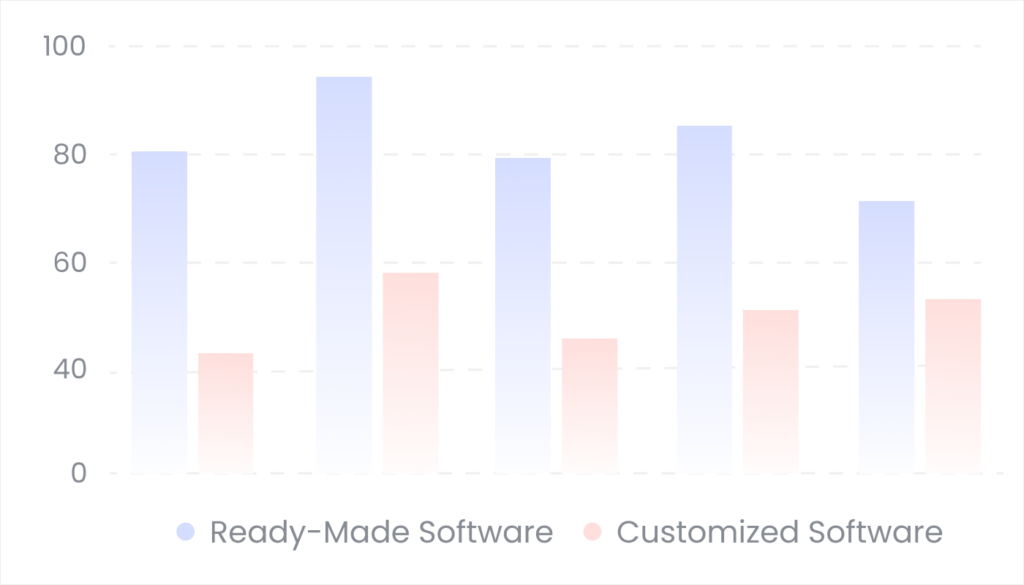
This is one of the most important decisions Gujarat schools face when selecting management software.
Ready-Made Software Solutions
Advantages:
- Lower initial cost and faster implementation
- Proven features that work for many schools
- Regular updates and improvements
- Established support systems
Disadvantages:
- Limited customization options
- Might not fit your school’s unique processes
- You adapt to the software instead of software adapting to you
- Less control over future feature development
Best for: Schools with standard processes that are willing to adjust workflows to match software capabilities.
Customized Software Solutions
Advantages:
- Built specifically for your school’s needs
- Perfect fit with existing processes
- Complete control over features and functionality
- Ability to modify and improve over time
Disadvantages:
- Higher initial investment
- Longer development and implementation timeline
- Requires ongoing technical support relationship
- Success depends heavily on vendor capability
Best for: Schools with unique requirements, complex processes, or specific needs that ready-made software can’t address.
Making the Right Choice
Consider customized solutions if your school:
- Has unique academic programs or assessment methods
- Serves multiple campuses with different needs
- Has complex fee structures or special student categories
- Requires integration with existing specialized systems
- Plans significant growth or program changes
Choose ready-made solutions if your school:
- Follows standard educational practices
- Wants to implement quickly with minimal disruption
- Prefers proven solutions with established track records
- Has limited budget for software development
- Wants to focus on education rather than technology management
Future-Proofing Your Software Investment

Technology changes rapidly, so choose solutions that will serve your school well for years to come.
Scalability Considerations
Your software should grow with your school:
- Student enrollment growth: Can the system handle 2x or 3x your current enrollment?
- New programs: Will it support additional academic programs, sports, or extracurricular activities?
- Multiple campuses: If you expand to additional locations, can the software manage multiple sites?
- New user types: Can you add users like bus drivers, security staff, or external coaches?
Technology Trends to Consider
Mobile-first design: Ensure the software works excellently on smartphones and tablets, not just computers.
Cloud-based architecture: Cloud systems offer better reliability, automatic updates, and easier access from multiple locations.
API integration capabilities: Your software should connect easily with other tools you might adopt in the future.
Data analytics features: Look for systems that help you understand trends in student performance, attendance, and parent satisfaction.
Vendor Stability and Support
Choose vendors who will support your school long-term:
- Financial stability: Established companies with sustainable business models
- Local presence: Support teams who understand Gujarat schools and can provide assistance in local languages
- Regular updates: Vendors who continuously improve their software
- User community: Active user groups where schools share experiences and best practices
Common Implementation Mistakes and How to Avoid Them

Learning from others’ mistakes can save your school time, money, and frustration.
Mistake 1: Rushing the Decision
What happens: Schools choose software quickly without proper evaluation, leading to buyer’s remorse and poor adoption.
How to avoid: Allow adequate time for research, trials, and staff input before making final decisions.
Mistake 2: Ignoring Staff Input
What happens: When staff who will use the software daily aren’t involved in selection, they resist adoption and the system fails.
How to avoid: Include key staff members in evaluation process and give them trial access to test functionality.
Mistake 3: Inadequate Training
What happens: Staff continues using old methods because they don’t understand new software capabilities.
How to avoid: Budget adequate time and resources for comprehensive training and ongoing support.
Mistake 4: Poor Data Migration
What happens: Incorrect or incomplete data transfer creates immediate problems and undermines confidence in the new system.
How to avoid: Clean up existing data before migration and test thoroughly with sample information.
Mistake 5: Unrealistic Expectations
What happens: Schools expect immediate perfection and become discouraged when adaptation takes time.
How to avoid: Set realistic timelines for full adoption and celebrate incremental progress.
The Decision Framework: Bringing It All Together
Use this framework to organize your decision-making process and ensure you choose the best school management software for your institution.
Step 1: Define Your Non-Negotiables
List requirements that any software must meet:
- Must work well with our current internet connectivity
- Must provide training in Gujarati or Hindi
- Must integrate with our existing accounting system
- Must cost less than ₹X annually
Step 2: Create Your Evaluation Scorecard
Rate each software option on important factors:
| Factor | Weight | Vendor A | Vendor B | Vendor C |
|---|---|---|---|---|
| Ease of use (staff) | 25% | 8/10 | 6/10 | 9/10 |
| Parent communication features | 20% | 7/10 | 9/10 | 7/10 |
| Fee management capabilities | 20% | 9/10 | 7/10 | 8/10 |
| Implementation support | 15% | 8/10 | 8/10 | 6/10 |
| Total cost of ownership | 10% | 7/10 | 9/10 | 8/10 |
| Customization options | 10% | 6/10 | 7/10 | 9/10 |
Step 3: Test with Real Scenarios
During evaluation, test each system with actual situations your school faces:
- Process a real student admission from application to enrollment
- Handle a complex fee payment scenario (partial payments, late fees, discounts)
- Generate attendance reports for government compliance
- Send emergency announcements to all parents
- Process exam results and generate report cards
Step 4: Check References Thoroughly
When speaking with reference schools, ask specific questions:
“What problems have you encountered, and how did the vendor help solve them?”
“How long did it take your staff to become comfortable with the system?”
“What would you do differently if you were implementing again?”
“Would you choose the same vendor again today?”
Your Next Steps
Choosing the right school management software is one of the most important technology decisions your school will make. The right choice improves efficiency, enhances parent satisfaction, and frees your staff to focus on education.
The wrong choice wastes money, frustrates everyone, and sets your school back months or years.
Start Your Evaluation Process
Begin with honest assessment of your current situation:
- Audit your current processes and identify specific pain points
- Talk to your staff about what would make their work easier
- Survey parents about their communication preferences and needs
- Set a realistic budget that includes implementation and training costs
- Create your evaluation timeline and stick to it
Remember the Key Principles
- Fit matters more than features: Choose software that matches your school’s needs, not the one with the most capabilities
- Staff adoption determines success: The best software in the world is worthless if your team won’t use it
- Implementation support is crucial: Choose vendors who will help you succeed, not just sell you software
- Start small and grow: You don’t need to use every feature immediately
Get Expert Guidance
If you’re feeling overwhelmed by the options or unsure about your school’s specific needs, consider getting expert guidance. Many Gujarat schools benefit from consulting with professionals who understand both educational requirements and technology capabilities.
The right school management software can transform your institution’s efficiency and effectiveness. Take time to choose wisely, and your school will benefit for years to come.
Ready to start your software selection process? We can help you understand your options, evaluate vendors, and choose the solution that’s perfect for your Gujarat school’s unique needs.
Contact us for a personalized consultation about school management software options that fit your specific requirements, budget, and goals.


 4.9 5000 Total Reviews
Join Our Inner Circle for Special Perks

 Trusted by 50000 educational pioneers