It’s 11:47 PM on a Tuesday night in Rajkot. My phone buzzes for the 247th time today.
“Ma’am, tomorrow school bus will come or not? Rain is there.”
I stare at the message, wondering if I should laugh or cry. This same question was asked by 15 other parents in the last hour. In three different WhatsApp groups. And tomorrow is a perfectly normal school day with light drizzle that hasn’t stopped Rajkot schools from functioning for the past 50 years.
Sound familiar?
If you’re running a school anywhere in Gujarat and dealing with Parents want everything on WhatsApp, you know exactly how I feel. What started as a simple way to stay connected has turned into a 24/7 message bombardment that’s driving school administrators to the edge of sanity.
Let me share the brutal truth about WhatsApp school communication – and more importantly, how we finally found a solution that keeps parents happy without destroying our peace of mind.
The WhatsApp Trap Every Gujarat School Falls Into

Three years ago, WhatsApp seemed like the perfect answer to parent communication. Free, instant, everyone already uses it. What could go wrong?
Everything.
How It Started vs. How It’s Going
- Year 1: “Let’s create a WhatsApp group for important announcements!”
- Year 3: 847 unread messages across 6 different groups, including a heated debate about whether samosas should be allowed in lunch boxes.
Here’s what actually happens when schools rely on WhatsApp for parent communication:
The Message Multiplication Disaster
One simple announcement becomes an avalanche:
- You send: “Tomorrow is sports day. Students should wear white t-shirt and blue shorts.”
- You receive: 47 individual questions asking the exact same thing you just announced
- Plus: 23 messages asking about weather contingency plans
- Plus: 15 parents asking if their child can wear different colored shorts
- Plus: 12 people asking what time sports day starts (even though it was in the original message)
That one announcement just generated 97 additional messages that someone needs to read and respond to.
The “Important Message Buried Alive” Problem
- Tuesday 2:30 PM: You send urgent message about early dismissal due to unexpected weather.
- Tuesday 2:31 PM: Parent shares good morning message with dancing flowers.
- Tuesday 2:32 PM: Another parent asks if anyone knows a good tuition teacher for math.
- Tuesday 2:33 PM: Someone forwards a “health tips for children” message with 47 bullet points.
- Tuesday 2:45 PM: Parent finally sees the early dismissal message buried under 23 irrelevant messages and panics.
The Multiple Group Confusion
Most schools end up with:
- Main announcement group (500+ parents)
- Class-wise groups (30-40 parents each)
- Transport groups
- Event organizing groups
- Emergency contact groups
Result? Parents asking the same question in 4 different groups, and you answering it 4 different times.
The Midnight Message Madness
Here are actual messages I received between 10 PM and 6 AM last month:
“Ma’am, my son has fever. Should I send him tomorrow or keep at home?” (11:23 PM)
“Tomorrow math test is there? My daughter is asking.” (12:47 AM)
“Good morning ma’am. Yesterday my child forgot water bottle in class. Where I can collect?” (5:15 AM)
WhatsApp created this expectation that school staff should be available 24/7. Parents genuinely don’t realize they’re messaging you at midnight because WhatsApp feels so casual and immediate.
Why Parents Love WhatsApp (And Why We Can’t Just Ban It)
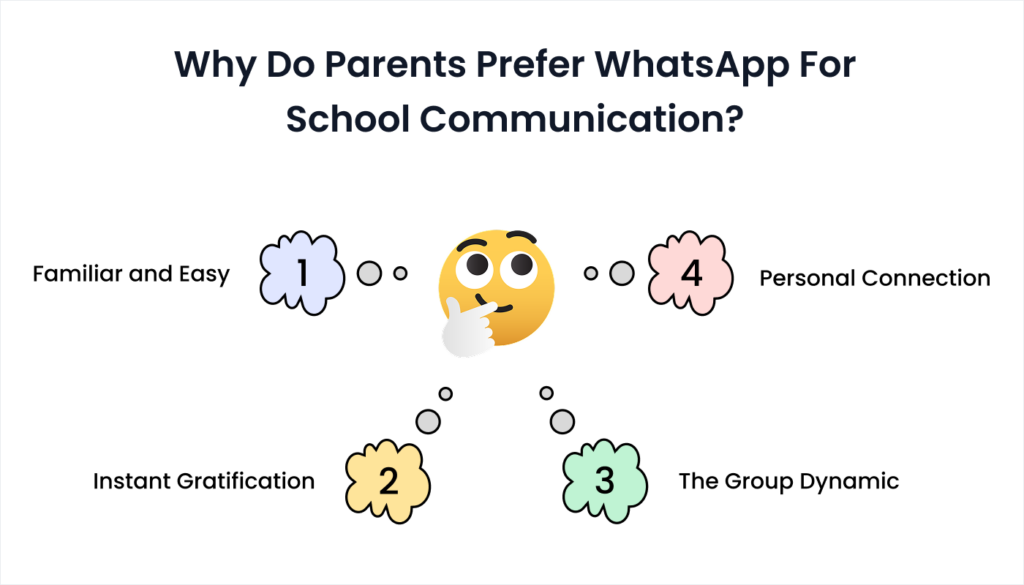
Before I share our solution, let’s be honest about why parents gravitate toward WhatsApp communication:
It’s Familiar and Easy
Every parent in Rajkot knows how to use WhatsApp. They don’t need training, app downloads, or password management. They can send a voice message in Gujarati while cooking dinner, and it feels natural.
Instant Gratification
Modern parents want immediate answers. When little Krish forgets his lunch money, Mom wants to know RIGHT NOW if she should rush to school or if he can manage without it.
The Group Dynamic
Parents feel connected to the school community through WhatsApp groups. They see other families’ concerns, share solutions, and feel involved in their child’s school experience.
Personal Connection
WhatsApp feels personal. Parents can send a quick “thank you” message or share a happy photo of their child in the school uniform. It builds relationships in ways formal communication channels don’t.
Parents want everything on WhatsApp – The real problem is not WhatsApp, but the organization
After analyzing thousands of messages, I realized parents don’t actually want to overwhelm us. They just want:
- Quick answers to simple questions
- Confidence that important information won’t get missed
- A way to reach the school when needed
- To feel connected to their child’s school community
The problem is that WhatsApp groups create disorder instead of organized communication.
What We Tried (And Why It Failed)

Before finding our current solution, we attempted several approaches that seemed logical but fell flat in practice:
Attempt #1: WhatsApp Group Rules
What we did: Created detailed group rules posted in every WhatsApp group.
The rules:
- No personal conversations in group
- Only school-related messages
- No forwarding of non-school content
- Questions should be asked privately to admin
- No messages after 8 PM or before 8 AM
What happened: Rules got ignored within a week. Parents either forgot or felt the rules were too strict for a “friendly” WhatsApp environment.
Attempt #2: Broadcast Lists Instead of Groups
What we did: Switched to WhatsApp broadcast lists to send one-way announcements.
The problem: Parents couldn’t see who else received the message, felt disconnected from the community, and started calling the office directly instead of messaging.
Attempt #3: Designated WhatsApp Hours
What we did: Announced that WhatsApp responses would only be given between 9 AM – 5 PM.
What happened: Parents continued sending messages at all hours, then got frustrated when they didn’t receive immediate responses. Emergency situations became unclear because parents couldn’t distinguish between urgent and routine matters.
The Solution That Actually Works Helps Us with School Communication Overload

After two years of WhatsApp in that School Communication Overload, so we discovered something that satisfied both parents’ communication preferences and our sanity: organized digital communication tools for schools that feels as personal as WhatsApp but works like professional school management.
The Hybrid Approach
We didn’t eliminate WhatsApp entirely – that would have caused a parent rebellion. Instead, we created a system where:
- WhatsApp remains for genuine emergencies and community building
- Structured digital communication handles routine information and queries
- Automatic systems answer the most common questions instantly
How It Works in Practice
Automatic Daily Updates:
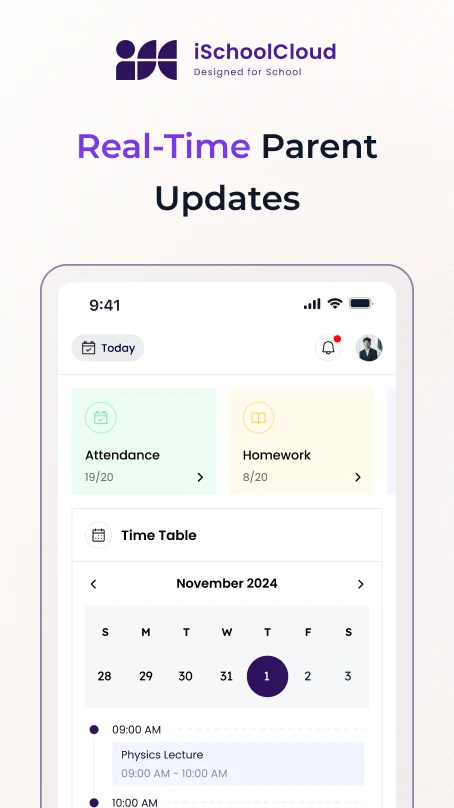
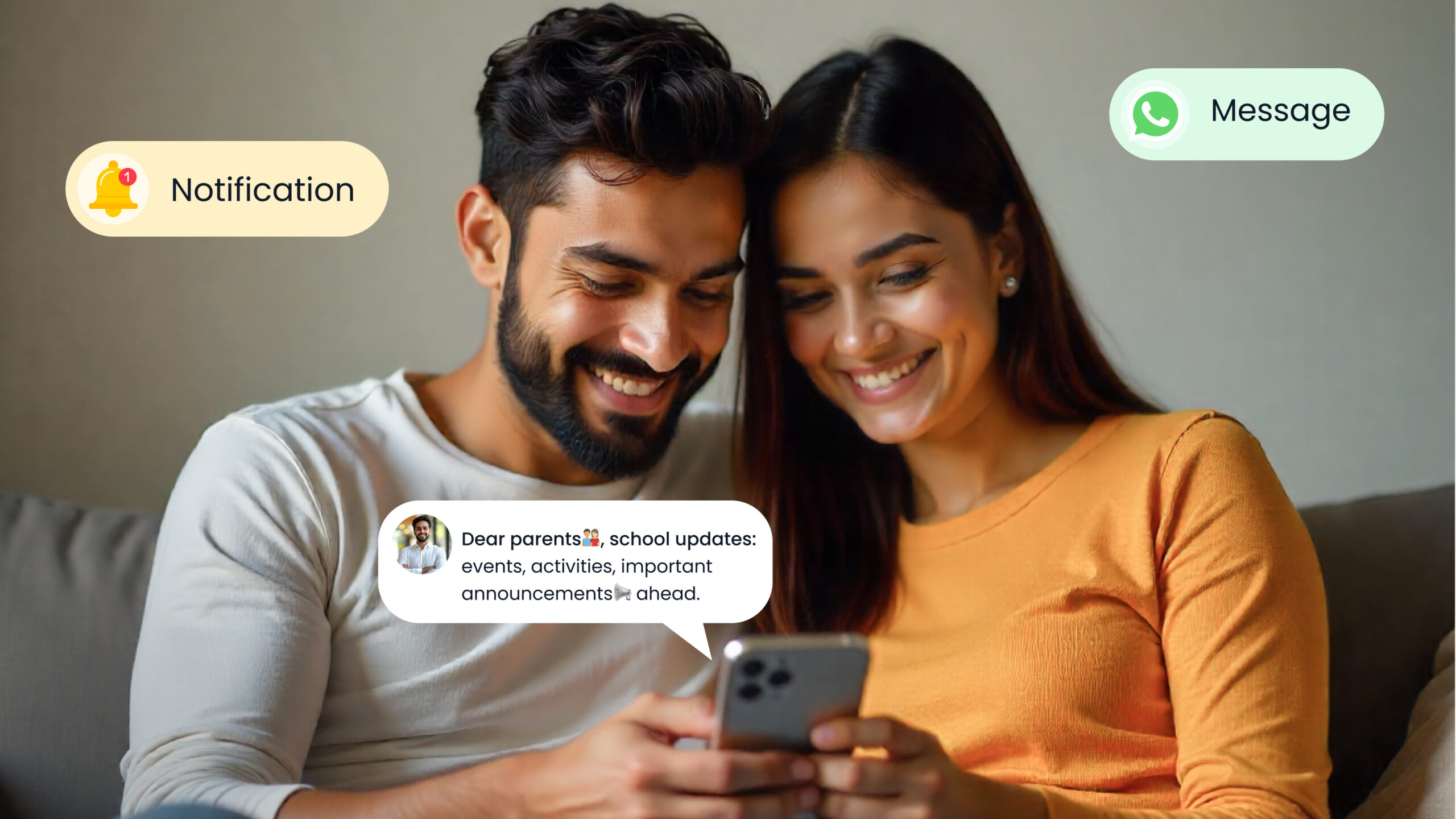
Instead of parents asking “Did my child reach school safely?” we now send automatic attendance confirmations. Parents receive a simple message: “Aarush marked present at 8:15 AM” without anyone needing to respond to individual queries.
Self-Service Information:
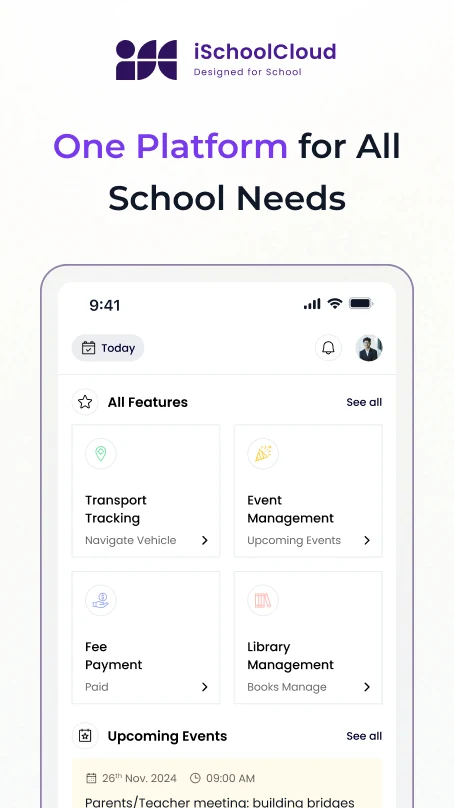
Parents can check common information instantly:
- Exam schedules and results
- Fee payment status
- Holiday calendar
- Homework assignments
- School event updates
Smart Communication Routing:
Different types of messages go to appropriate places:
- Administrative questions → Handled by system or office staff during working hours
- Academic concerns → Routed to relevant teachers
- Health emergencies → Direct to principal/nurse immediately
- General discussions → Optional WhatsApp groups for parents who want community interaction
The Results After 8 Months
The change has been dramatic:
- WhatsApp messages to school staff: Down from 200+ daily to 15-20
- Response time for genuine emergencies: Improved from hours to minutes
- Parent satisfaction: Increased because they get faster, more accurate information
- Staff stress levels: Significantly reduced
- Important information getting lost: Virtually eliminated
Unexpected Benefits
- Better Emergency Response: When genuine emergencies occur, we notice them immediately because they’re not buried under 150 routine messages about lunch boxes and water bottles.
- Improved Parent Relationships: Counter-intuitively, when parents get reliable information through organized channels, our WhatsApp interactions become warmer and more positive. Instead of frustrated questions, we receive thank you messages and community support.
- Teachers Can Actually Teach: Our teachers report spending 90% less time answering repetitive parent questions, giving them more time for lesson planning and individual student attention.
How We Managed the Change Without Parent Revolt
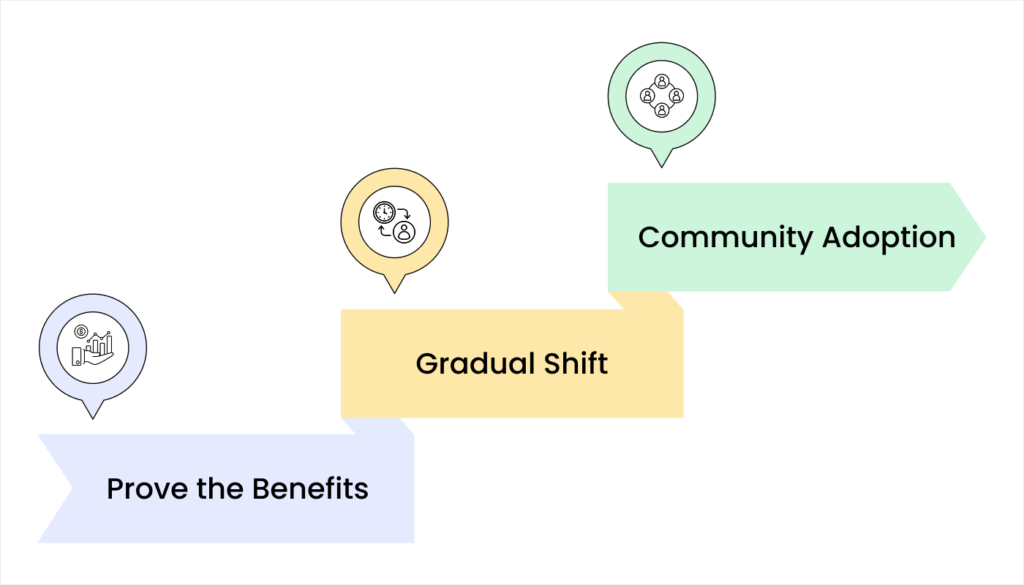
The key to successful implementation was making parents feel like they were gaining better service, not losing their preferred communication method.
Phase 1: Prove the Benefits (Month 1-2)
- Start with what parents want most: We began by providing automatic attendance updates and instant fee balance checking. Parents immediately saw the value of getting information without having to ask for it.
- Keep WhatsApp for positives: We continued using WhatsApp for sharing good news, celebrating achievements, and community building. This maintained the emotional connection parents valued.
Phase 2: Gradual Shift (Month 3-4)
- Redirect gently: When parents asked routine questions in WhatsApp, we’d respond: “Great question! You can check this anytime at [link/app]. I’ve also sent the answer there so you have it whenever you need it.”
- Show, don’t tell: Instead of explaining why the new system was better, we demonstrated it by providing faster, more accurate responses through the organized channels.
Phase 3: Community Adoption (Month 5-6)
- Parent advocates: Early adopters became advocates, sharing their positive experiences with other parents. When Mrs. Sharma could check her daughter’s exam results instantly at 11 PM without messaging the school, she told other parents how convenient it was.
- Peer pressure (positive): As more parents adapted to the organized system, others naturally followed to avoid feeling left out or outdated.
Common Concerns and How We Addressed Them

“But WhatsApp is So Easy!”
- Parent concern: “I don’t want to learn new apps or systems. WhatsApp is simple.”
- Our approach: We made the organized system even easier than WhatsApp. Parents receive information automatically without having to ask, and checking school information requires fewer steps than finding relevant messages in busy WhatsApp groups.
“Will You Still Care About My Individual Child?”
- Parent concern: “Digital systems feel impersonal. I want teachers to know my child personally.”
- Our solution: Organized communication actually enables more personalized attention. When teachers aren’t spending time answering routine questions, they can focus on meaningful interactions with individual students and families.
“What About Emergencies?”
- Parent concern: “What if I need to reach the school urgently?”
- Our system: True emergencies (health issues, family crises, safety concerns) still get immediate personal attention. The difference is that genuine emergencies are now visible and handled promptly because they’re not buried under routine communications.
Practical Steps to Reduce Your WhatsApp Overload
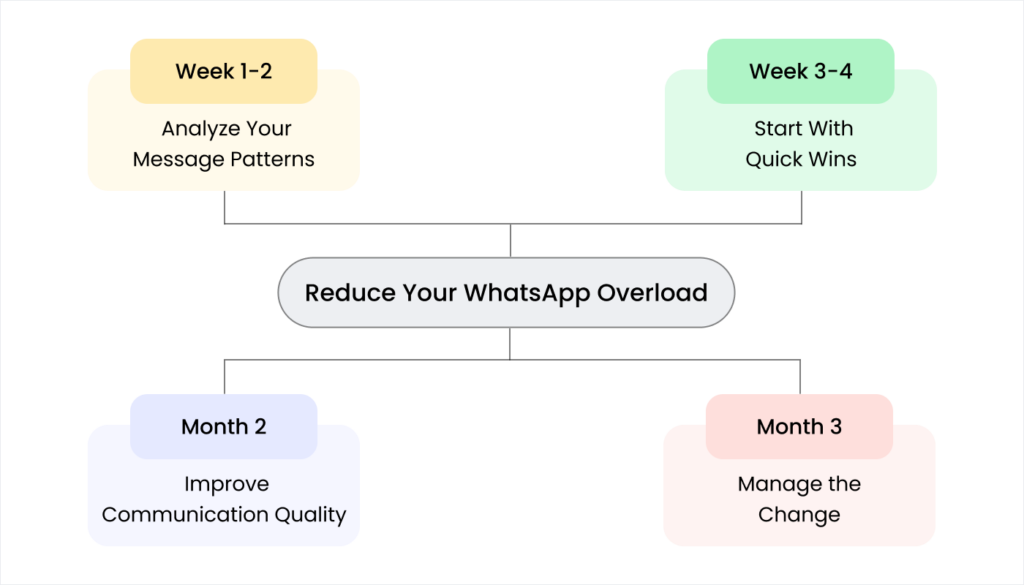
If you’re drowning in WhatsApp messages and ready for change, here’s how to start changing your school’s communication:
Week 1-2: Analyze Your Message Patterns
Track your questions:
For one week, categorize every WhatsApp message you receive:
- Routine information requests (attendance, fees, schedules) – Usually 60-70%
- Clarification questions (about announcements already sent) – Usually 20-25%
- Administrative issues (forms, procedures, deadlines) – Usually 10-15%
- Genuine emergencies or personal concerns – Usually 5-10%
Identify automation opportunities:
The routine information requests are perfect candidates for automated responses or self-service options.
Week 3-4: Start With Quick Wins
Implement automatic attendance notifications:
This single change can reduce 30-40% of your daily WhatsApp messages. Parents stop asking “Did my child reach school?” because they already know.
Create easy information access:
Set up simple ways for parents to check common information themselves:
- Fee payment status and history
- School calendar and holidays
- Exam schedules and results
- Homework assignments
Month 2: Improve Communication Quality
- Send proactive updates: Instead of waiting for parents to ask questions, send comprehensive information proactively. When announcing sports day, include timing, dress code, weather contingency plans, and parent attendance details in the first message.
- Create communication templates: Develop standard responses for common questions. This ensures consistent information and saves time.
Month 3: Manage the Change
- Gentle redirection: When parents ask questions that can be answered through organized channels, respond helpfully while guiding them to the better method.
- Celebrate successes: Share positive feedback from parents who appreciate the improved communication system.
Addressing the “But My School Is Different” Objections

“My Parents Are Not Tech-Savvy”
- Reality check: Parents who use WhatsApp daily can definitely use simple school communication tools. The key is choosing systems that are actually simpler than managing multiple WhatsApp groups.
- Gradual approach: Start with basic SMS updates for less tech-savvy parents while offering app-based options for others.
“We’re Too Small for Fancy Systems”
- Truth: Small schools often benefit most from organized communication because every parent relationship matters more.
- Scalable solutions: Many systems are designed specifically for smaller Gujarat schools with affordable pricing and simple implementation.
“Parents Will Resist Change”
- Experience shows: Parents resist change that makes their lives harder. They embrace changes that provide better, faster, more reliable information about their children.
- The secret: Implement improvements alongside WhatsApp initially, then gradually shift as parents see the benefits.
Your Action Plan: From Disorder to Organized Communication
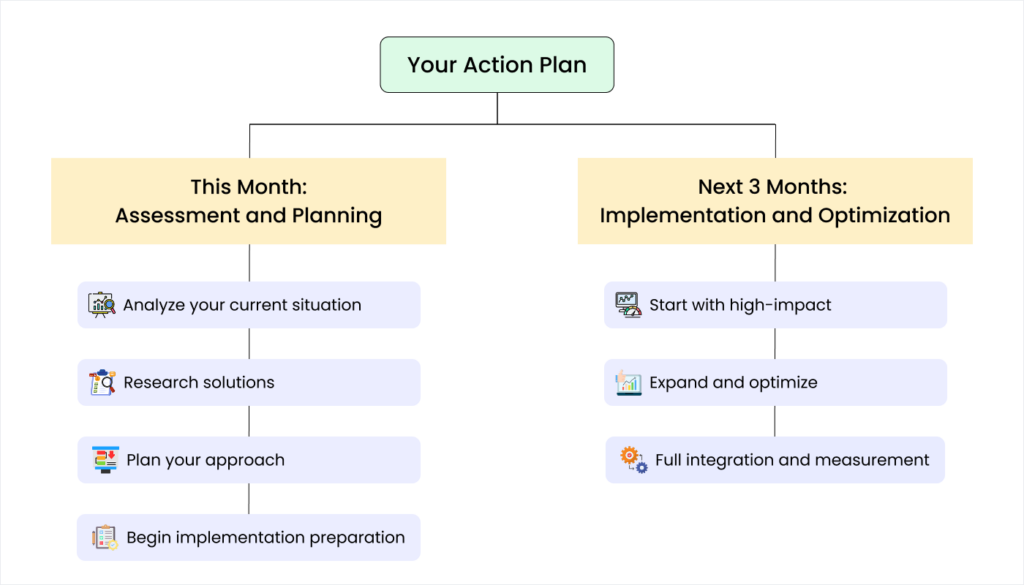
Ready to reclaim your peace of mind and provide better service to parents? Here’s your step-by-step action plan:
This Month: Assessment and Planning
Week 1: Analyze your current situation
- Track WhatsApp messages for one week by category
- Identify the most common questions and requests
- Calculate time spent on WhatsApp communication daily
- Survey 10-15 parents about their communication preferences
Week 2: Research solutions
- Explore school management systems designed for Gujarat schools
- Visit or call 2-3 schools that have implemented organized communication
- Calculate your current hidden costs of communication disorder
- Set realistic budget for communication improvements
Week 3: Plan your approach
- Decide which communication areas to tackle first
- Prepare staff for upcoming changes
- Create communication strategy for parents
- Set timeline for implementation
Week 4: Begin implementation preparation
- Select vendors for trials or demonstrations
- Plan training schedule for staff
- Prepare parent education materials
- Set success metrics to track improvement
Next 3 Months: Implementation and Optimization
Month 1: Start with high-impact, low-risk changes
- Implement automatic attendance updates
- Create simple fee checking system
- Begin redirecting routine questions to organized channels
- Maintain WhatsApp for community and emergency communication
Month 2: Expand and optimize
- Add more self-service information options
- Train parents on new communication methods
- Gather feedback and make adjustments
- Celebrate early successes with staff and parents
Month 3: Full integration and measurement
- Complete system implementation
- Measure results against initial goals
- Refine processes based on experience
- Plan next phase improvements
Conclusion: Your School’s Communication Future

Six months ago, I was drowning in 200+ WhatsApp messages daily, staying up until midnight answering the same questions over and over, and watching important information get lost in the noise.
Today, I receive 15-20 meaningful WhatsApp messages daily. Parents get better information faster. Teachers focus on teaching instead of message management. Our school feels more organized and professional.
The change didn’t happen overnight, and it wasn’t about replacing human connection with cold technology. It was about organizing communication so that personal interactions become more meaningful and effective.
What Success Really Looks Like
Success isn’t about eliminating all WhatsApp communication. It’s about:
- Making routine information automatic so parents don’t need to ask
- Creating clear channels for different types of communication
- Maintaining personal connections while eliminating communication disorder
- Giving parents better service with less stress for school staff
Your school can achieve this change. The technology exists, the process is proven, and other Gujarat schools are already benefiting from organized communication.
The question isn’t whether you should improve your school’s communication systems – it’s how quickly you can start.
Ready to Fix Your School’s Communication?

Don’t spend another month drowning in WhatsApp message disorder while parents get frustrated with slow, inconsistent information.
We specialize in helping Gujarat schools move from communication confusion to organized, efficient parent engagement that actually improves relationships.
Contact us today for a personalized consultation about:
- Analyzing your current communication costs and challenges
- Designing systems that match your school’s unique needs
- Planning smooth implementation without parent resistance
- Training your team for successful adoption
- Measuring results and optimizing performance
Your peace of mind, your parents’ satisfaction, and your school’s professional reputation are worth the investment in better communication systems.
Call us or visit our website to schedule your free communication assessment. Let’s turn your WhatsApp nightmare into organized, effective parent engagement that everyone appreciates.
Finally, sleep peacefully knowing your school’s communication is working for everyone, not against you.